20 Home Office Decor Ideas for Productive Workspaces

A home office should help you stay focused, not distract you every few minutes. The furniture, lighting, storage, and wall decor all affect how comfortable and productive the space feels during long workdays. Even small decorating changes can make daily tasks easier when every item has a clear purpose.
Good Home Office Decor is not about filling every corner with decorations. The goal is creating a workspace that stays organized, feels comfortable, and still reflects your personality. Practical storage, thoughtful lighting, calming colors, and meaningful details work together much better than adding random decorative pieces.
The decor ideas below combine style with function. Each one helps improve the way your office looks while also making the space easier to use every single day.
1. Floating Wall Shelves
- Save valuable floor space.
- Keep supplies organized.
- Display decorative accents.
- Easy to customize.
- Great for small offices.
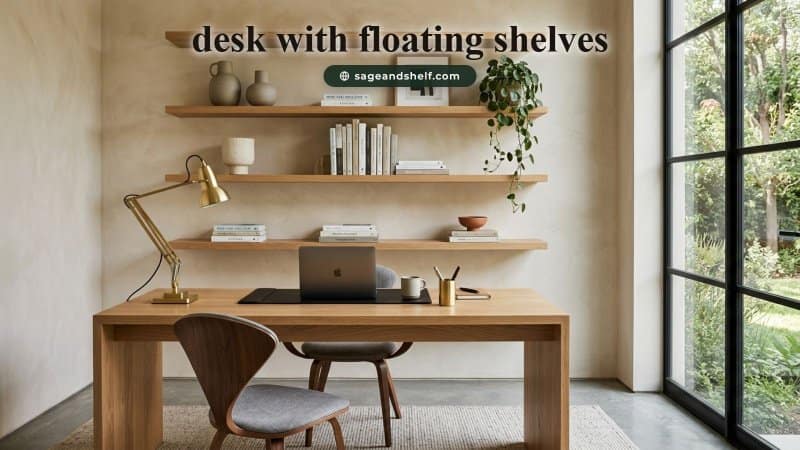
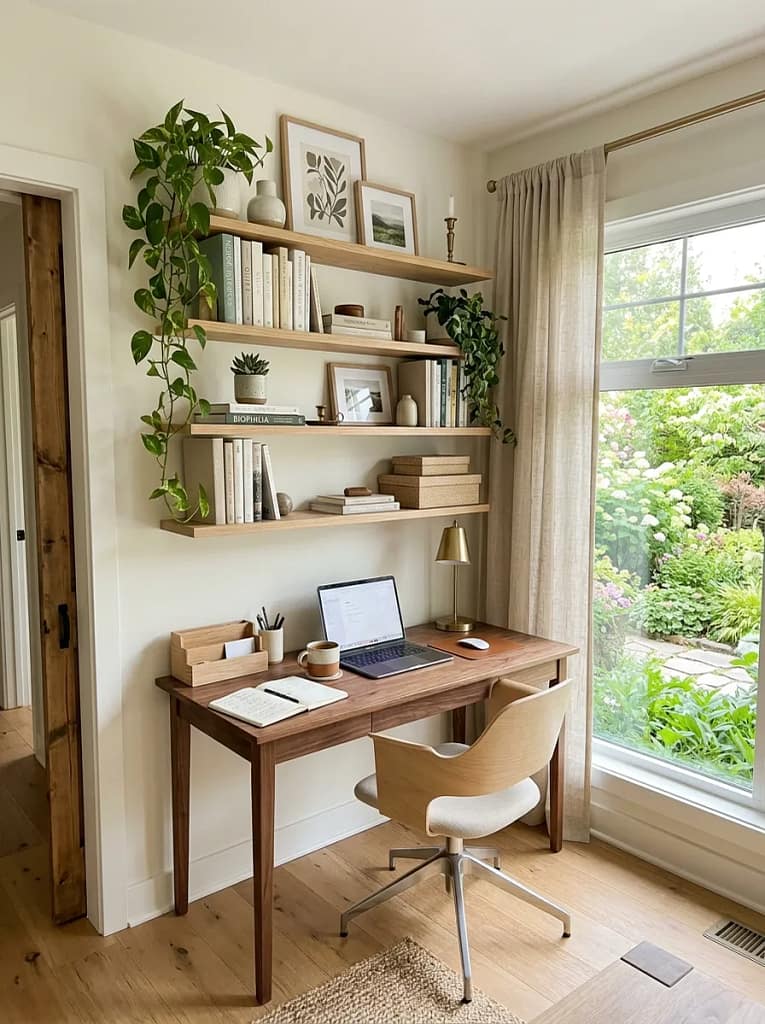
Floating shelves make use of wall space that usually stays empty. Instead of letting books, files, and office supplies cover your desk, move frequently used items onto shelves where they stay easy to reach without creating clutter. This instantly gives your workspace a cleaner appearance and leaves more room for daily tasks.
Mix practical storage with decorative pieces so the shelves feel balanced. Store books inside matching bookends, place small storage boxes for office supplies, then finish the arrangement with one or two plants or framed prints. Leaving a little empty space between items helps the shelves look organized instead of overcrowded.
Install the shelves at eye level whenever possible. Keeping them too high makes everyday items harder to reach, while placing them too low can interfere with monitors or other furniture underneath.
Also Read: 23 Fall Wall Art Ideas for Beautiful Seasonal Style
2. Inspiring Gallery Wall
- Personalizes the workspace.
- Encourages creativity.
- Easy seasonal updates.
- Works in every style.
- Creates a focal point.
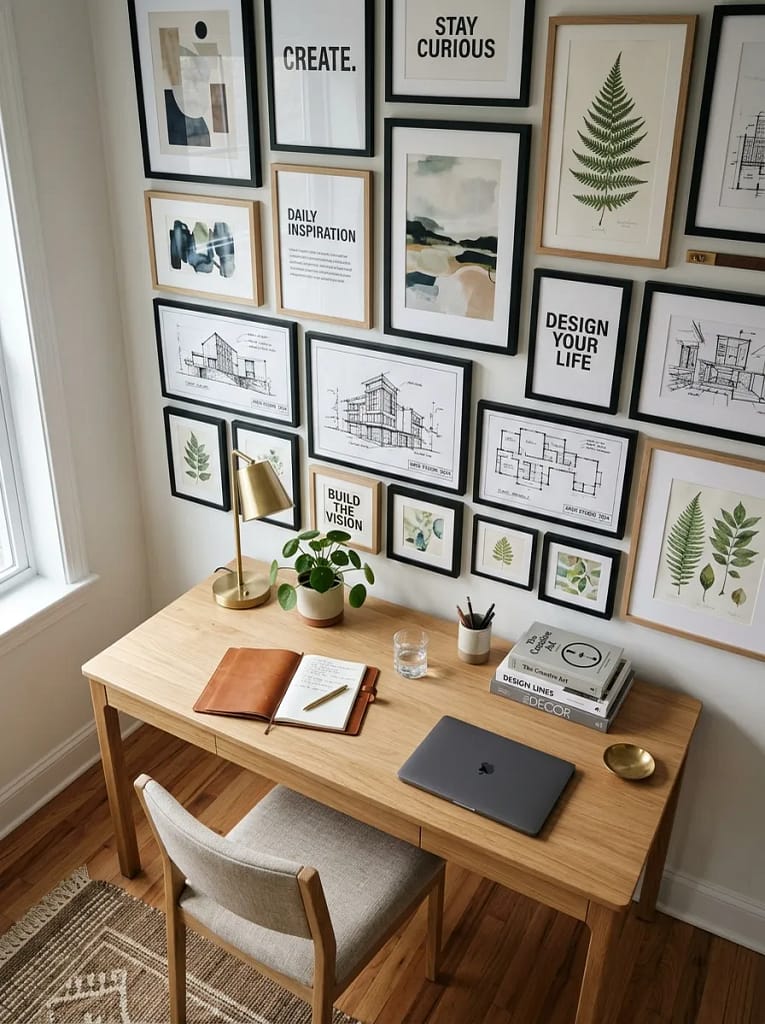
A gallery wall gives your office personality without taking up desk space. Combine motivational quotes, artwork, certificates, travel photos, or simple illustrations that remind you why you enjoy your work. Looking at meaningful images throughout the day can help the workspace feel more enjoyable instead of purely functional.
Choose frames that share a similar color or finish so the arrangement feels connected. Black, white, oak, or walnut frames usually blend easily with most office furniture. Before hanging anything permanently, arrange the frames on the floor first until you find a layout that feels balanced.
Avoid filling every inch of the wall. A gallery with enough breathing room looks more professional and allows each piece to stand out on its own.
3. Desk Plant Styling
- Brings natural color.
- Freshens the workspace.
- Easy to maintain.
- Reduces empty desk space.
- Creates a relaxing atmosphere.
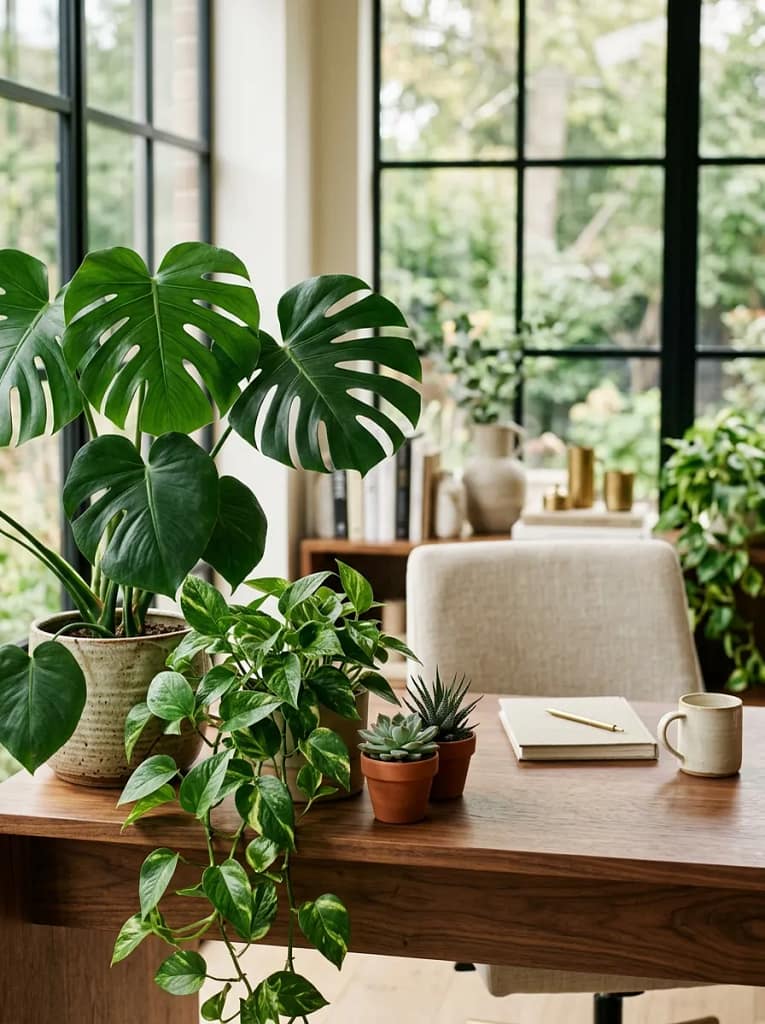
Adding a plant is one of the simplest ways to make a home office feel more welcoming. Even a small pot beside your monitor softens the look of electronics and paperwork while bringing a little life into the room. Snake plants, pothos, ZZ plants, and peace lilies are popular because they need very little attention and grow well indoors.
Choose a plant that fits the size of your desk instead of buying the biggest one available. A large plant can quickly make a compact workspace feel crowded, while one medium or small planter keeps the desk balanced. If natural light is limited, high-quality artificial plants can still provide the same visual warmth without any maintenance.
4. Cozy Area Rug
- Makes the room feel warmer.
- Defines the workspace.
- Reduces echo.
- Adds texture.
- Comfortable underfoot.
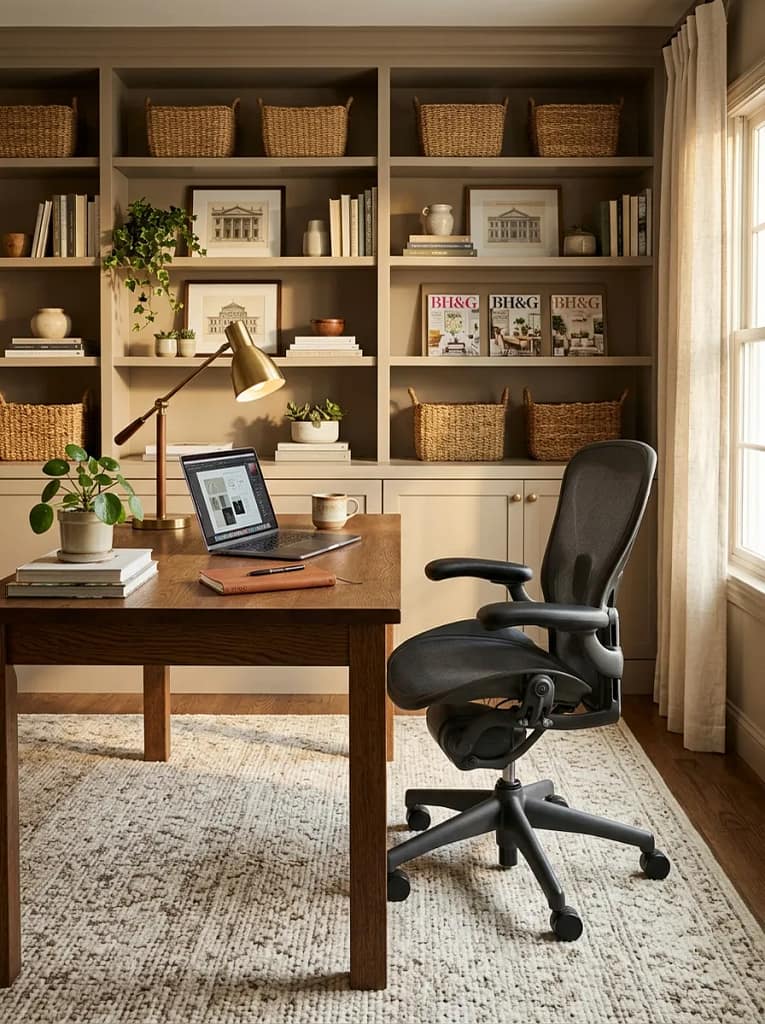
A rug does much more than decorate the floor. It visually separates the office from the rest of the room, especially if your workspace shares space with a bedroom or living room. Soft textures also help reduce noise, making the office feel quieter during video meetings or focused work sessions.
Pick a rug that’s large enough for both your desk and chair. Your chair should stay on the rug even when you roll backward, otherwise the wheels constantly catch on the edge. Neutral colors, subtle patterns, or woven textures usually age better than loud prints because they remain easy to style as the room changes.
5. Desk Organizer Setup
- Reduces daily clutter.
- Keeps supplies nearby.
- Saves working time.
- Makes cleaning easier.
- Improves focus.
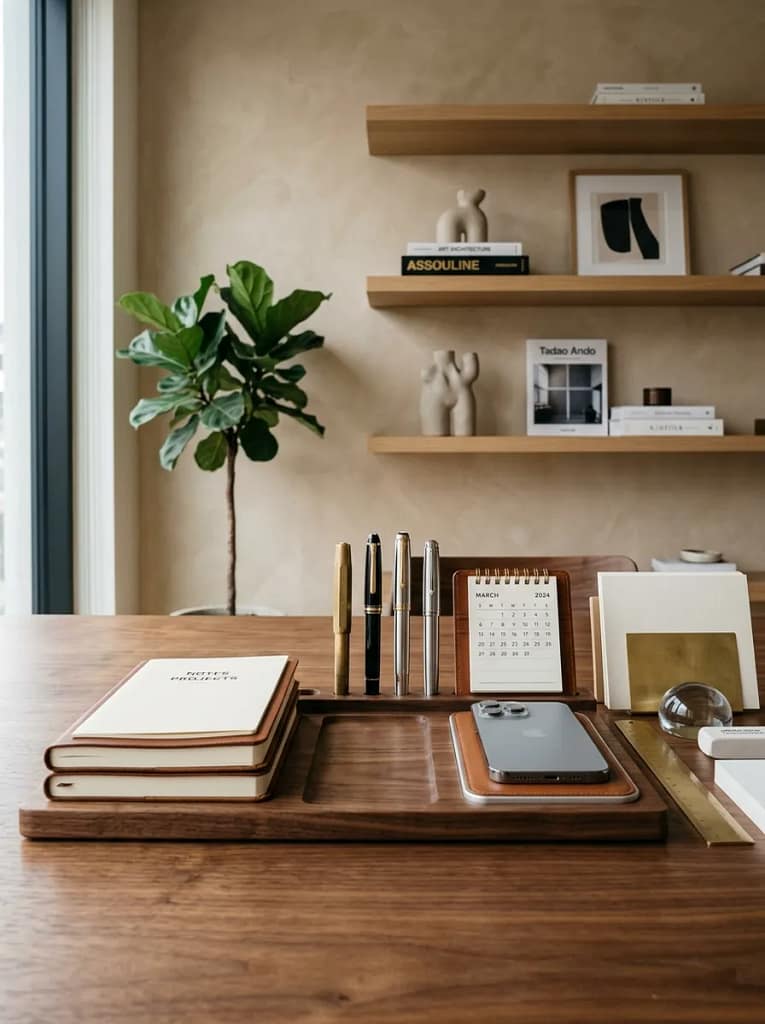
Searching for pens, chargers, or sticky notes every hour quickly becomes frustrating. A desk organizer keeps the items you use every day within easy reach while preventing small objects from spreading across the desktop. Separate compartments for stationery, cables, notebooks, and business cards also make the workspace easier to maintain.
Choose organizers that match your office style. Bamboo trays suit warm natural interiors, while metal or acrylic organizers work better in modern spaces. Instead of filling every compartment, leave a little empty space so new supplies always have somewhere to go.
6. Statement Pendant Light
- Brightens the workspace.
- Adds decorative interest.
- Saves desk space.
- Creates layered lighting.
- Completes the room.
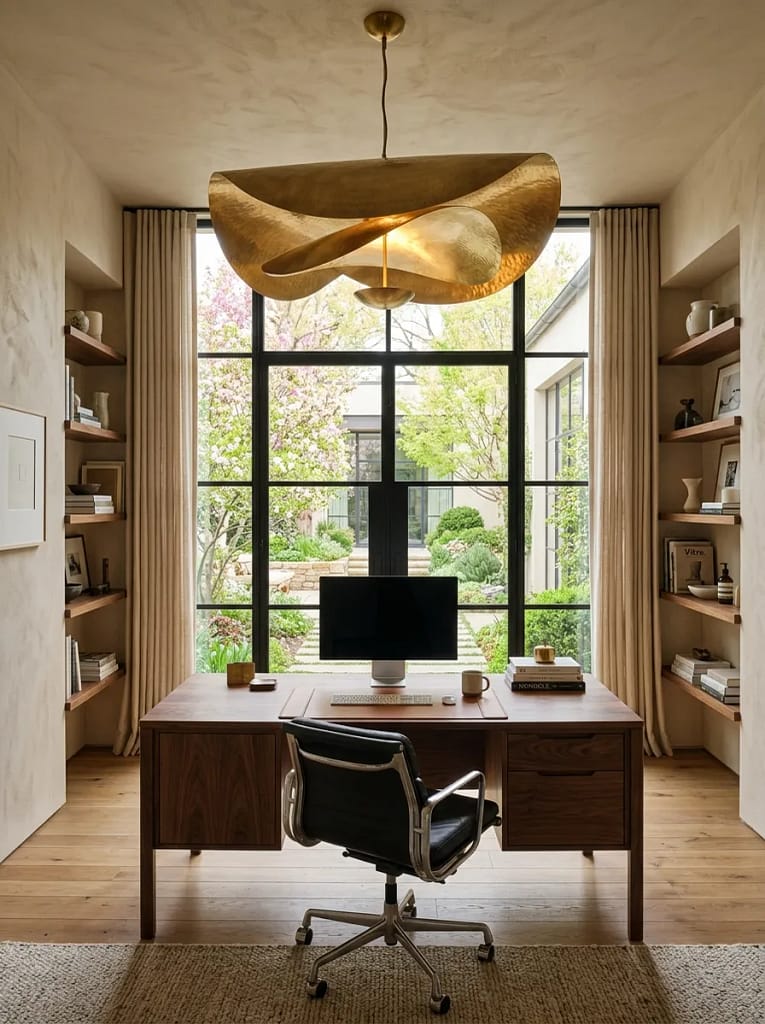
Lighting affects both comfort and productivity. A statement pendant gives the room character while providing better overall illumination than relying only on one ceiling fixture. Warm white bulbs usually create a comfortable environment that feels inviting without making the room too dark.
Hang the pendant high enough that it doesn’t block your view when standing or walking around the office. If your desk already has a task lamp, let the pendant provide general room lighting while the smaller lamp handles close-up work. Using both light sources together creates a much more comfortable workspace than depending on only one.
7. Woven Storage Baskets
- Hide everyday clutter.
- Add natural texture.
- Easy to move.
- Great for open shelving.
- Fits many decor styles.
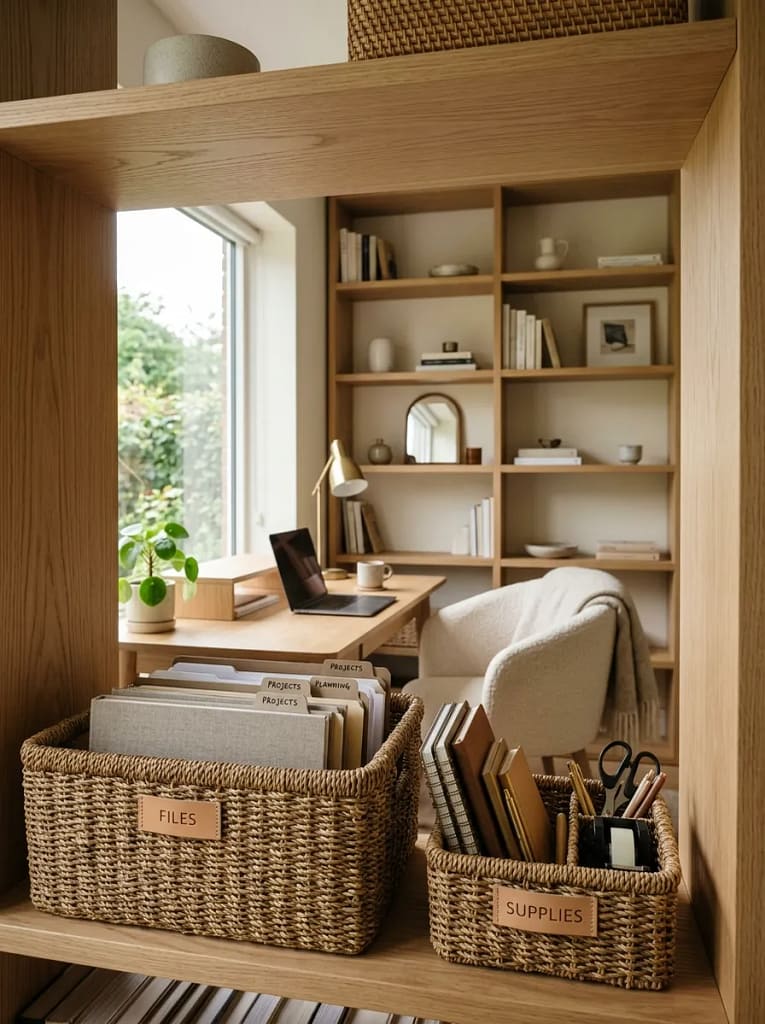
Not everything belongs on display. Woven baskets keep extra notebooks, printer paper, charging cables, and office accessories hidden while still looking attractive on shelves or underneath desks. Natural materials like seagrass, rattan, or wicker also help balance the harder surfaces found in most offices.
Use labels if several baskets sit together so you can find items quickly without opening every container. Matching basket sizes create a cleaner appearance, especially on floating shelves or bookcases. Home Office Decor always feels more polished when storage looks intentional instead of improvised.
8. Ergonomic Desk Chair
- Supports better posture.
- Improves daily comfort.
- Reduces back strain.
- Adjustable for different users.
- Worth long-term investment.
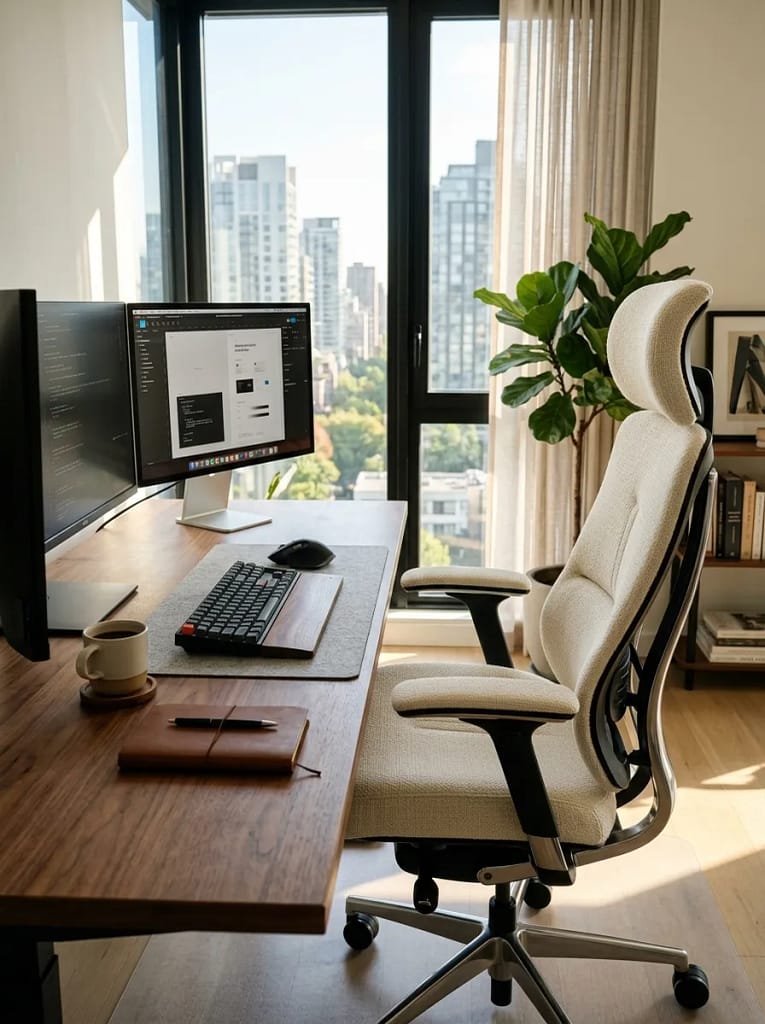
A beautiful office loses its appeal if the chair becomes uncomfortable after one hour. An ergonomic chair supports your back, shoulders, and arms during long work sessions, helping reduce fatigue and improving posture throughout the day. Comfort should always come before appearance because you’ll spend more time using the chair than looking at it.
Adjust the seat height so your feet rest flat on the floor and your elbows stay close to ninety degrees while typing. Breathable fabric or mesh backs also remain cooler during longer workdays compared to solid materials. A well-fitted chair often becomes the single most valuable upgrade in any home office.
9. Cable Management Box
- Hides messy wires.
- Keeps the desk neat.
- Protects power strips.
- Easy to use.
- Makes cleaning simpler.
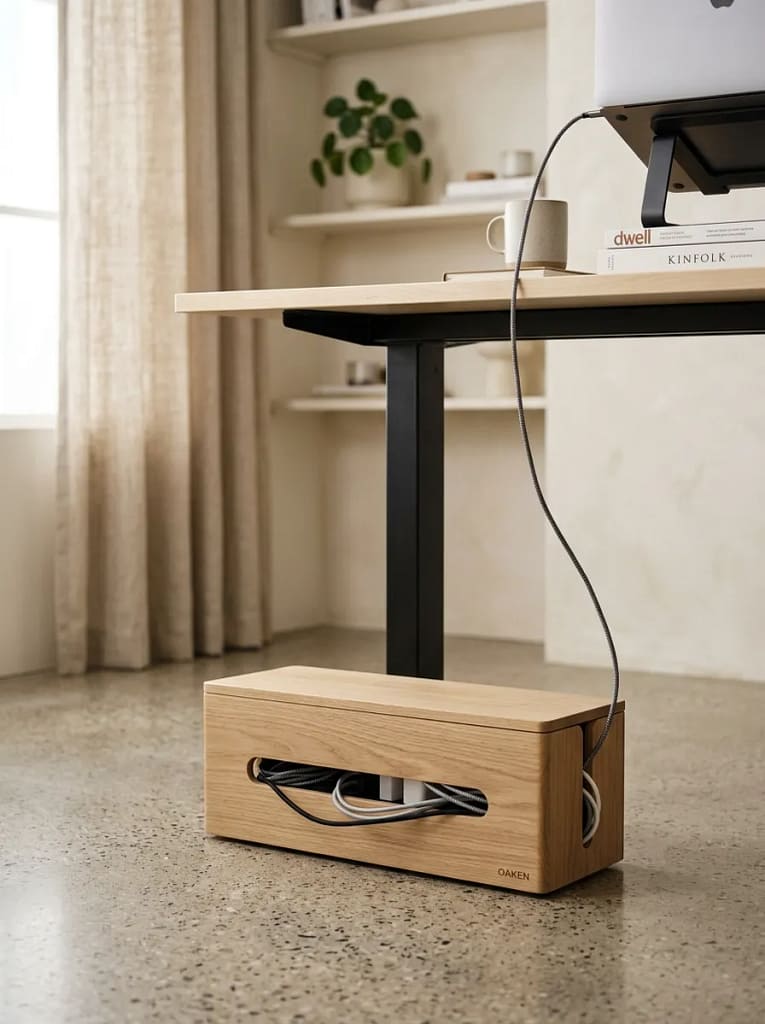
Loose cables quickly make even a beautiful office feel untidy. A cable management box keeps extension cords, chargers, and power strips inside one enclosed container so only the cables you actually need remain visible. This creates a cleaner workspace while also making it easier to vacuum or wipe around the desk.
Choose a box large enough to hold your power strip without forcing the cords into tight bends. Place it underneath the desk or beside a cabinet where it stays hidden but remains easy to access whenever you need to plug in another device. Small cable clips along the desk edge also help guide charging cables so they don’t constantly slide onto the floor.
10. Corner Desk Nook

- Uses unused space.
- Creates dedicated workspace.
- Fits small homes.
- Increases working surface.
- Keeps the room organized.
Corners often become wasted space filled with random storage or unused furniture. Turning one corner into a dedicated desk nook helps separate work from the rest of the room without requiring an entire home office. Even compact apartments can usually fit a corner desk more comfortably than a large straight desk.
Keep the area visually open by using floating shelves instead of bulky cabinets above the desk. Adding one desk lamp, a plant, and simple storage gives the nook everything needed for productive work without making the corner feel cramped. Home Office Decor should always support the way you work instead of filling valuable space with unnecessary items.
11. Polaroid Photo Wall
- Personal workspace touch.
- Displays favorite memories.
- Easy to update.
- Encourages positive mood.
- Affordable decoration.
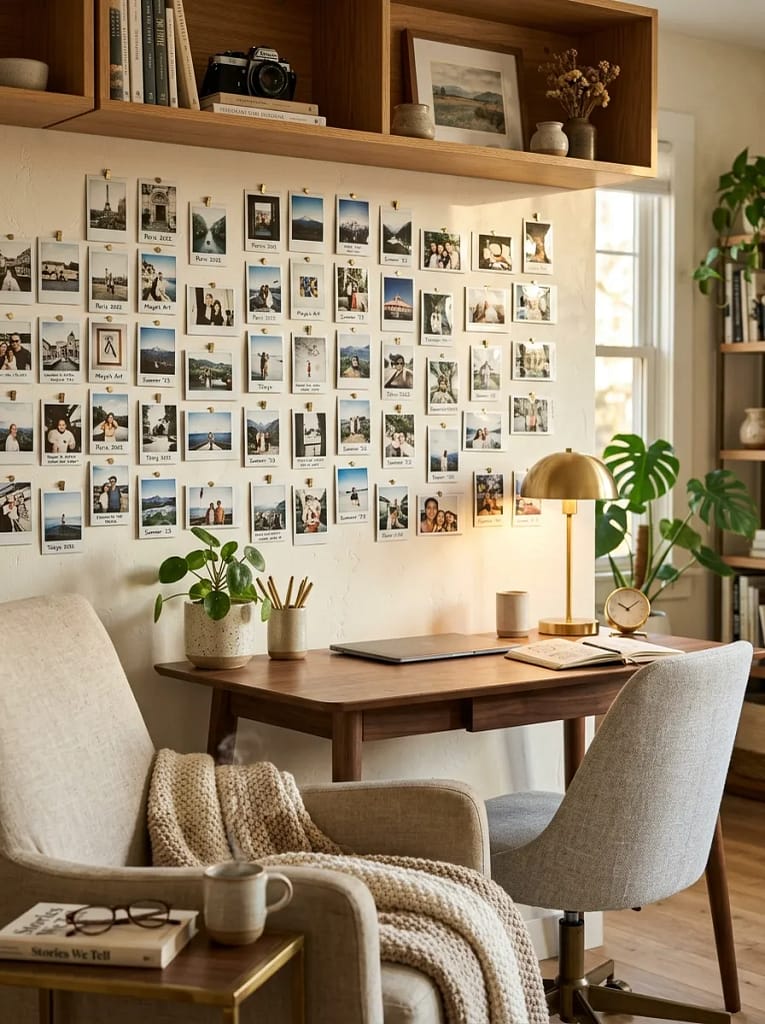
Looking at happy memories during a busy workday can make the office feel much more personal. A Polaroid wall lets you display family moments, vacations, pets, friends, or achievements without covering an entire wall with large frames. The collection grows naturally over time, making it feel authentic rather than staged.
Arrange the photos in clean rows, a loose grid, or clip them onto string with small wooden clothespins. Leave a little space between each picture so individual memories remain easy to appreciate. Updating a few photos every few months also keeps the display feeling fresh without completely redesigning the wall.
12. Styled Bookshelf Display
- Organizes books neatly.
- Adds decorative interest.
- Creates balanced shelves.
- Shows personality.
- Improves office appearance.
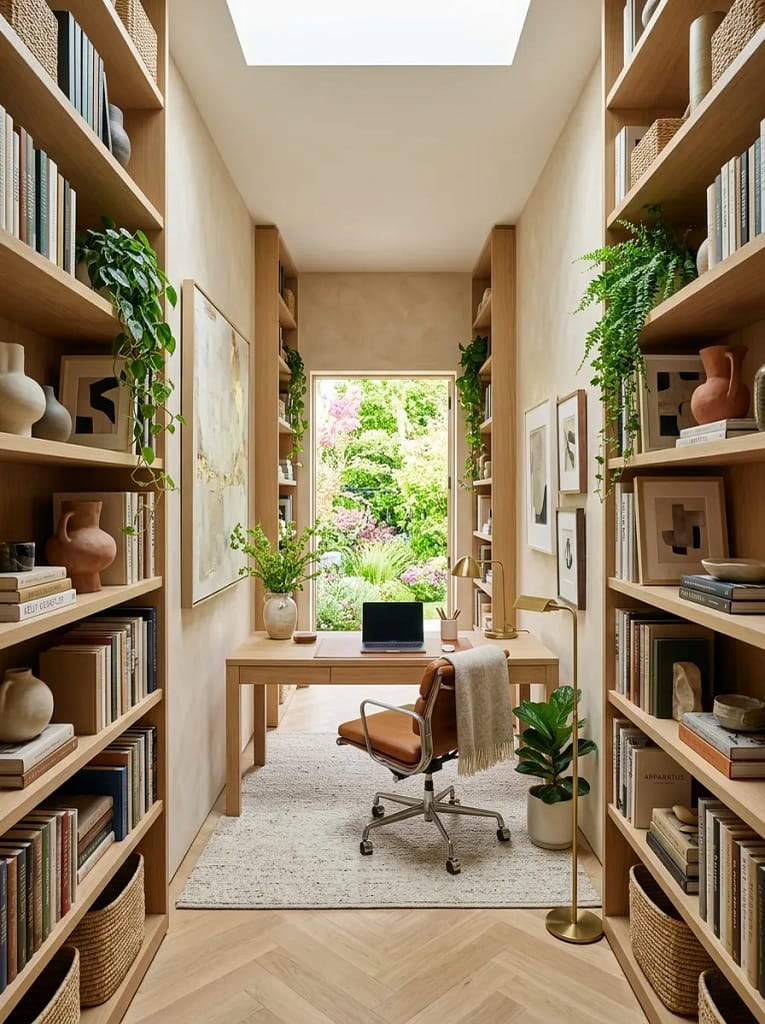
Bookshelves work best when they hold more than books alone. Mixing reference books with framed photos, plants, storage boxes, pottery, or small sculptures creates shelves that feel collected instead of overloaded. Varying the height and texture of objects also keeps every shelf visually interesting.
Don’t fill every shelf from edge to edge. Leaving open areas helps the bookshelf look organized while giving your eyes places to rest. Store everyday office supplies inside matching baskets or decorative boxes so practical items stay accessible without creating visible clutter.
13. Calming Color Palette

- Reduces visual stress.
- Helps improve focus.
- Creates peaceful workspace.
- Easy to coordinate.
- Timeless decorating choice.
The colors surrounding your desk influence how the room feels throughout the day. Soft shades like sage green, warm beige, dusty blue, light gray, and creamy white create a calmer environment than bright reds or strong neon colors. A balanced color palette also makes decorating much easier because nearly every accessory blends naturally.
Choose one main color, one supporting color, and one accent color instead of introducing many different shades. This approach keeps furniture, artwork, rugs, and storage looking connected without making the office feel flat. Natural wood finishes also work beautifully with calm color schemes because they introduce warmth without adding visual noise.
14. Personal Photo Display
- Makes the office feel welcoming.
- Celebrates important memories.
- Easy to customize.
- Works on desks or shelves.
- Adds emotional connection.
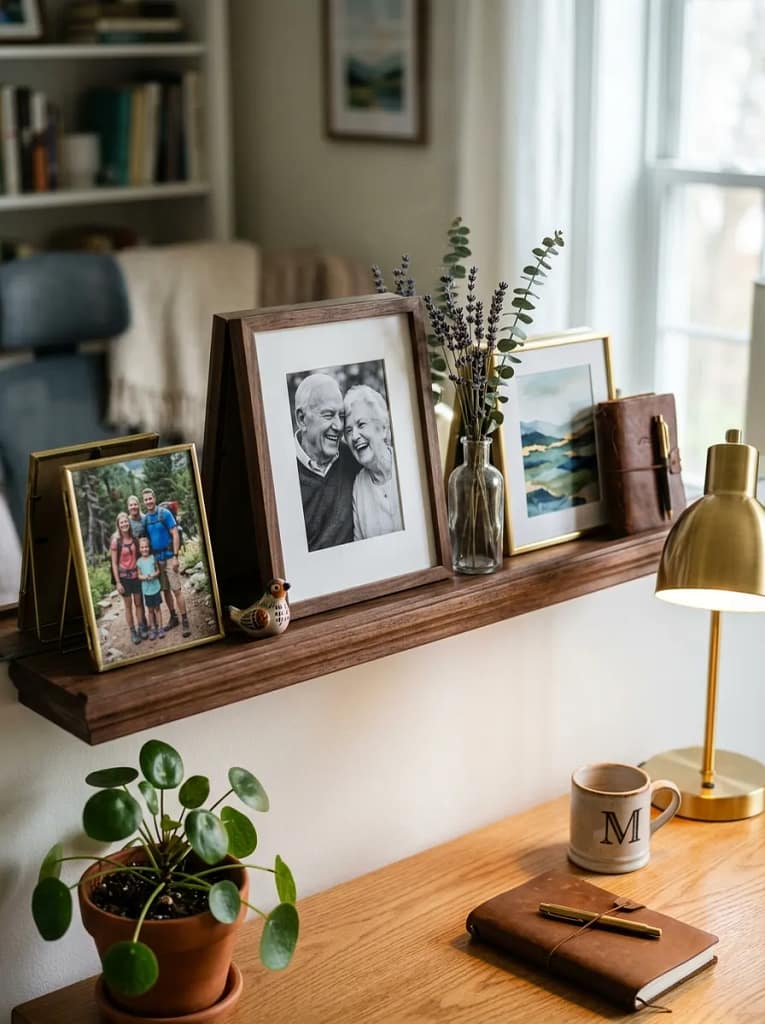
Personal photos remind you that work is only one part of your life. Displaying a few meaningful pictures of family, friends, travels, or special milestones helps the office feel more comfortable while giving the space a sense of identity. Choosing only your favorite images prevents the desk from looking crowded.
Use matching frames to keep the display neat, especially if the photos sit together on one shelf. Rotating pictures throughout the year also keeps the display interesting while allowing new memories to become part of your workspace. The goal is creating encouragement, not filling every available surface with photographs.
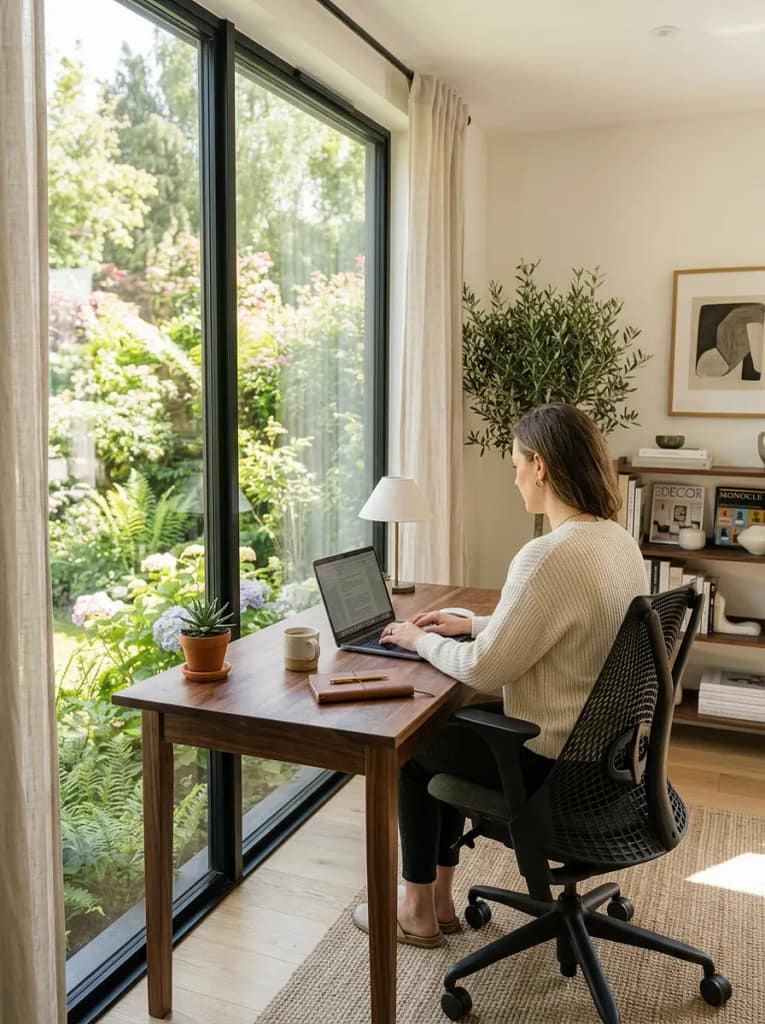
15. Natural Light Desk
- Improves daytime visibility.
- Makes the room feel open.
- Helps reduce eye strain.
- Saves electricity.
- Boosts daily comfort.
Where you place your desk matters just as much as the desk itself. Positioning it near a window allows natural daylight to brighten your workspace, making reading documents and working on screens more comfortable during the day. Many people also find it easier to stay focused when they can occasionally look outside instead of staring at a wall for hours.
Avoid placing the monitor directly in front of the window because glare can become distracting. Setting the desk beside the window usually gives the best balance between good lighting and comfortable screen visibility. Light-filtering curtains also help control harsh afternoon sunlight without blocking the room completely.
Also Read: 22 Laundry Room Decor Ideas for Stylish Small Spaces
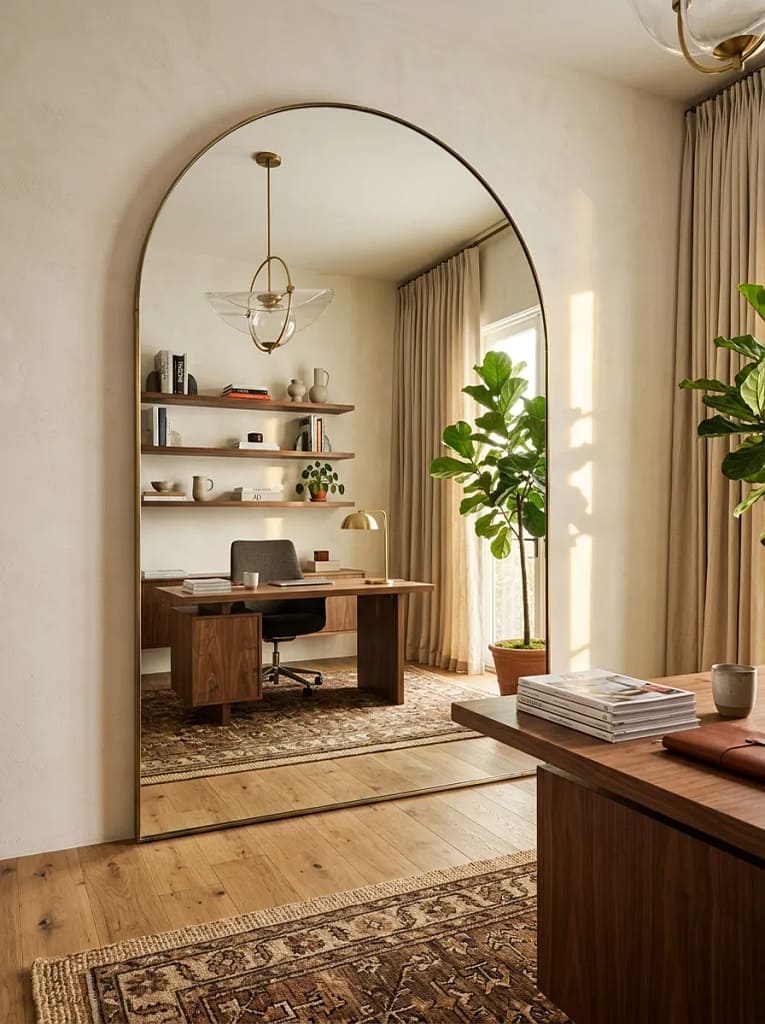
16. Statement Wall Mirror
- Reflects natural light.
- Makes small offices feel larger.
- Adds decorative detail.
- Brightens dark corners.
- Easy wall upgrade.
A well-placed mirror changes how a room feels without requiring major decorating. It reflects both natural and artificial light, helping compact offices appear brighter and more spacious. This is especially useful in home offices located in spare bedrooms or smaller corners of the house.
Choose a mirror that matches the furniture style instead of treating it like a separate decoration. Thin black frames suit modern offices, while wood or antique finishes fit farmhouse and traditional spaces better. Hanging the mirror opposite a window lets it reflect outdoor light, making the entire room feel more open.
17. Cork Vision Board

- Organizes important reminders.
- Displays goals clearly.
- Easy to update.
- Encourages creativity.
- Keeps ideas visible.
Important notes often disappear inside drawers or notebooks. A cork vision board keeps schedules, project ideas, inspirational quotes, calendars, and reminders visible without covering your desk with sticky notes. Everything stays in one place, making daily planning much easier.
Leave space for new ideas instead of filling every inch immediately. Updating the board regularly keeps it useful because old papers don’t pile up beside current projects. Framing the cork board in wood or black metal also helps it blend naturally with the rest of your Home Office Decor instead of looking like classroom equipment.
18. Reading Nook Corner

- Creates a quiet break area.
- Encourages better focus.
- Comfortable during long days.
- Makes the office feel complete.
- Works in larger rooms.
Working continuously without stepping away from the desk can become exhausting. A small reading corner gives you another place to review documents, brainstorm ideas, or simply take a short mental break before returning to work. Even ten quiet minutes away from the computer can help improve concentration afterward.
A comfortable chair, small side table, soft blanket, and floor lamp are usually enough to create the space. Place the nook near a window if possible so natural light makes reading easier during the day. Keeping the corner simple prevents it from turning into another storage area.
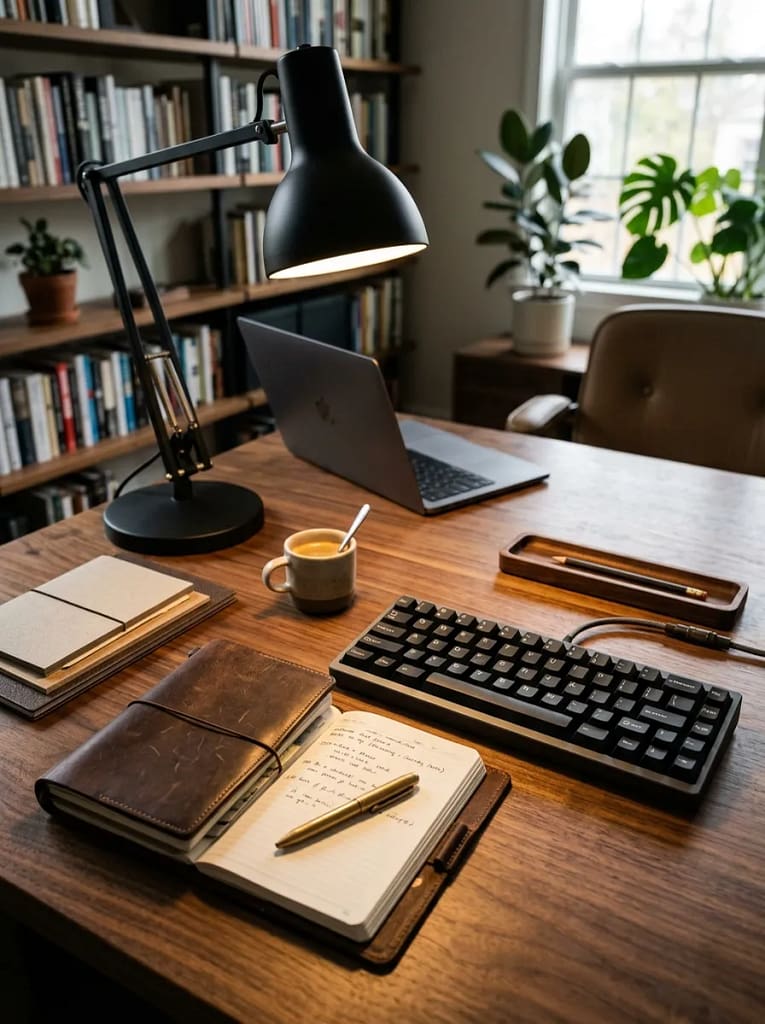
19. Task Desk Lamp
- Provides focused lighting.
- Reduces eye fatigue.
- Easy to adjust.
- Great for evening work.
- Saves desk space.
General ceiling lighting doesn’t always provide enough brightness for detailed work. A task lamp directs light exactly where you need it, making writing, sketching, reading, or reviewing paperwork much more comfortable. Adjustable arms allow you to move the light without constantly repositioning the entire lamp.
Warm white LED bulbs usually create the best balance between comfort and visibility. Position the lamp on the opposite side of your writing hand to reduce shadows while working. Choosing a slim lamp design also leaves more room for keyboards, notebooks, and other daily essentials.
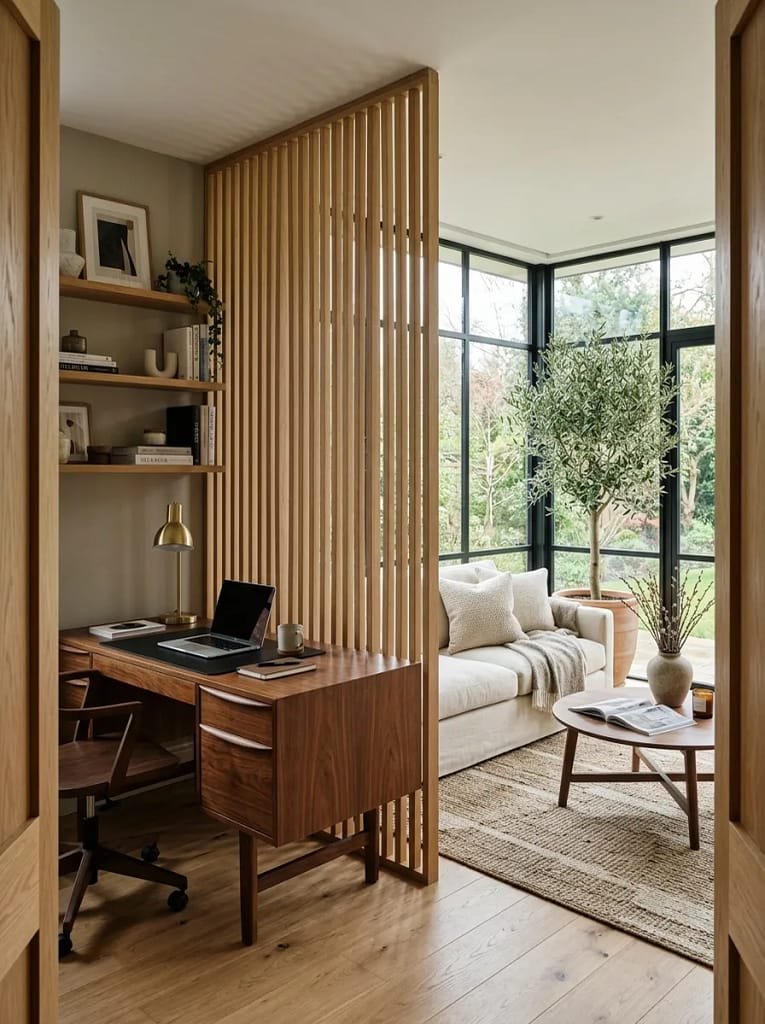
20. Room Divider Screen
- Separates work from home life.
- Adds decorative style.
- Provides extra privacy.
- Easy to move.
- Great for shared spaces.
Many home offices share space with bedrooms, living rooms, or family areas. A folding room divider helps create a visual boundary so the workspace feels separate even when there isn’t a dedicated office. That simple division often makes it easier to switch into work mode during the day and mentally leave work behind afterward.
Wooden slat screens, woven rattan panels, or fabric dividers all provide different looks while serving the same purpose. Choose a lightweight design that folds easily if you need to move it often. Besides adding privacy, the divider also becomes another decorative feature that helps the office feel intentionally designed instead of temporarily arranged.
Also Read: 20 Laundry Room Organization Ideas for Clutter Free Space
Frequently Asked Questions
1. How can I decorate a home office on a budget?
Start with changes that make the biggest difference without costing much. Add floating shelves, organize supplies in matching containers, hang printable wall art, bring in a small plant, and use better lighting before replacing expensive furniture. Small improvements often change the room more than buying several decorative items at once.
2. What colors work best for a productive home office?
Soft, neutral colors usually help people stay focused longer. Sage green, warm beige, light gray, soft blue, and off-white create a calm environment that feels comfortable during long work sessions. Bright colors can still work, but they are often better as accents instead of covering the entire room.
3. Where should I place my desk in a home office?
A desk usually performs best near a window where natural daylight is available without creating direct screen glare. If that’s not possible, position the desk where you have enough space to move comfortably and keep frequently used storage within easy reach. Avoid placing your chair where people constantly walk behind you because interruptions can affect concentration.
4. How do I keep a home office looking organized?
Give every item its own storage place instead of letting supplies stay on the desktop. Use drawer organizers, baskets, shelves, cable management, and labeled storage boxes so everything returns to the same location after use. Spending five minutes organizing at the end of each day prevents clutter from building throughout the week.
5. What type of lighting is best for a home office?
Layering different light sources usually gives the best results. Natural daylight works during the morning, ceiling lighting brightens the room overall, and an adjustable task lamp provides focused light for reading or writing. This combination reduces eye strain much better than relying on only one light source.
6. Are plants good for a home office?
Yes, plants make a workspace feel more comfortable and visually balanced. Low-maintenance varieties like snake plants, pothos, and ZZ plants require very little care while adding natural color to the room. If the office receives almost no sunlight, realistic artificial plants still provide a similar decorative effect.
7. How do I decorate a small home office without making it feel crowded?
Choose furniture that serves more than one purpose and keep decorations simple. Floating shelves, wall-mounted organizers, compact desks, and vertical storage help free up floor space while keeping the office functional. Limiting decorative pieces to a few meaningful items also helps the room feel larger.
8. What is the most important piece of Home Office Decor?
An ergonomic chair usually has the biggest impact because you’ll use it every working day. Comfortable seating improves posture, reduces fatigue, and makes long hours much easier. After choosing a good chair, focus on lighting, storage, and organization before adding decorative accessories.
Conclusion
A productive workspace starts with thoughtful choices instead of expensive decorations.
Every improvement, whether it’s better lighting, organized storage, comfortable seating, or meaningful artwork, helps create a space where working feels easier and less stressful. The most successful offices combine practical function with personal style instead of focusing on appearance alone.
Choose one or two ideas that solve your biggest workspace problem first. As you continue improving the room over time, your Home Office Decor will not only look better but also help you stay organized, comfortable, and focused every day.
Visit sageandshelf for more details.