21 Living Room Renovation Ideas That Boost Home Style
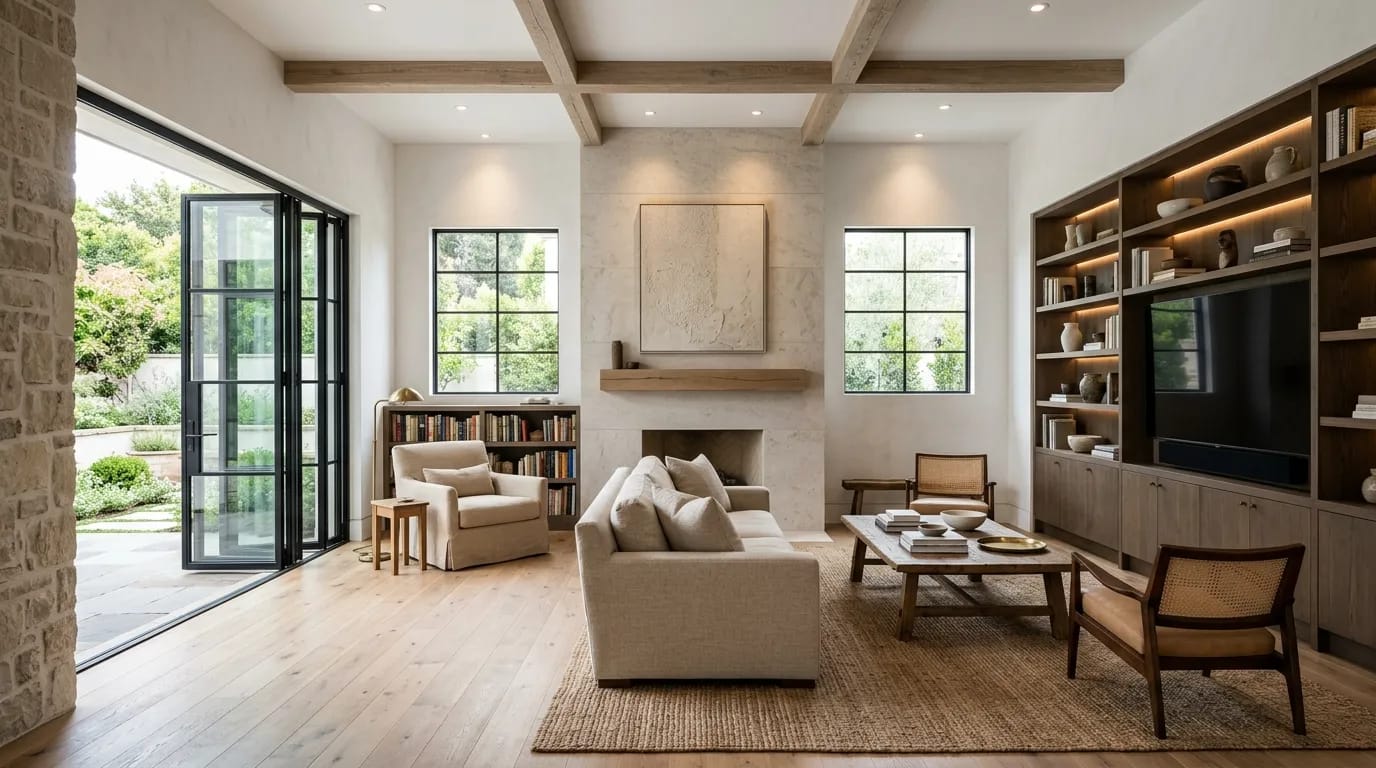
Living rooms get used more than almost any other space in a home. Morning coffee happens there. Movie nights happen there. Friends sit there. Family gathers there. After a while, even a well-loved room starts showing its age. Worn flooring, outdated lighting, limited storage, and awkward layouts slowly make the space feel less enjoyable than it should.
A good living room renovation isn’t about chasing trends or replacing everything at once. It starts by fixing the things that make daily life harder. Maybe the room feels too dark because the windows are small. Maybe there is nowhere to hide cables or blankets. Maybe the furniture never seems to fit quite right because the layout works against you instead of with you. Solving those problems first creates a room that feels better every single day.
Some décor ideas make an immediate difference the moment you walk through the door. Fresh hardwood flooring changes how the whole room feels under your feet. Better lighting removes dark corners. Built-in storage clears away clutter that has been piling up for years. Even one well-planned project can completely change the atmosphere without requiring a full rebuild.
The best part is that every home needs something different. One living room might benefit from removing a wall, while another simply needs stronger architectural details or smarter storage. There isn’t one perfect renovation plan. The right choice depends on how you actually live inside the space.
The ideas below cover practical upgrades that improve comfort, appearance, and long-term value. Some projects are weekend improvements. Others require a bigger investment. Together, they show how a thoughtful living room renovation can turn an ordinary space into the room everyone naturally wants to spend time in.
1. Hardwood Floor Upgrade
- Makes the whole room feel more valuable.
- Lasts for decades with proper care.
- Works with modern and classic interiors.
- Easy to refresh with sanding and staining.
- Adds warmth under every step.
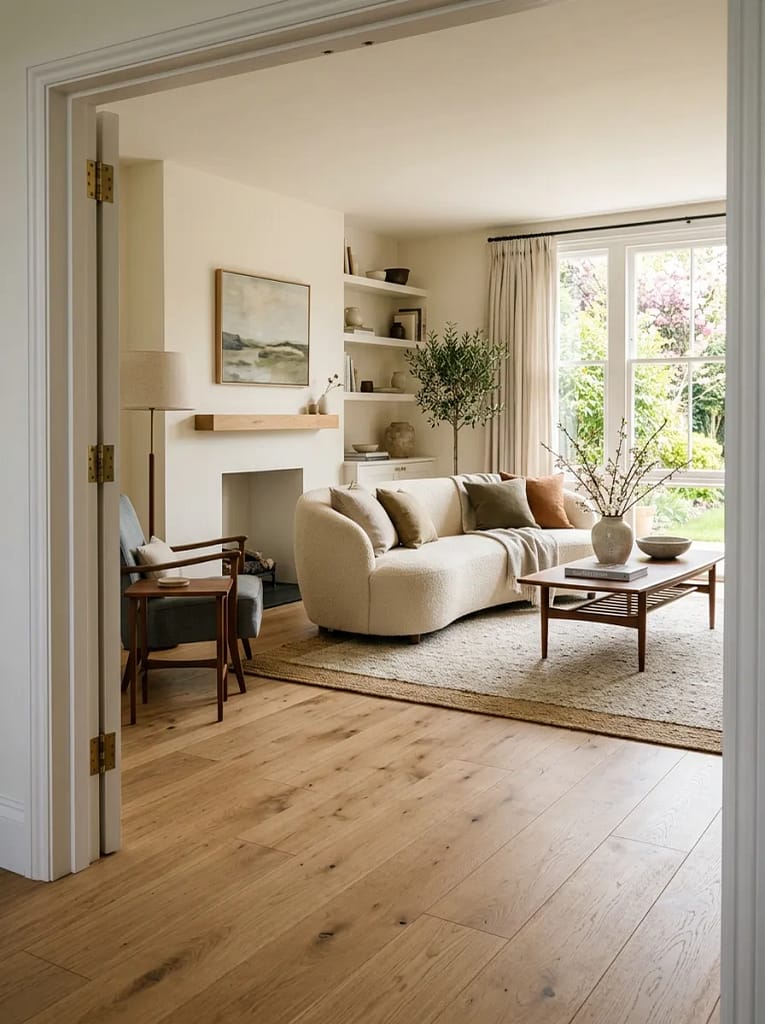
Walk into almost any beautifully renovated living room and your eyes usually go upward first. Your feet, however, notice the floor before anything else. Old carpet can make an otherwise updated room feel tired, while quality hardwood instantly changes the mood. It reflects natural light better, creates cleaner sightlines, and makes furniture feel more intentional.
Oak remains one of the safest investments because it handles everyday family life while offering timeless appeal. White oak leans modern with softer grain patterns, while red oak brings a warmer traditional feel. Wider planks continue to be popular because they reduce visual seams, helping the room appear larger without changing the actual footprint.
Before installation, think about how the flooring connects to nearby spaces. Running the same hardwood into hallways or adjoining rooms creates better flow throughout the home. Finish everything with oversized area rugs instead of wall-to-wall carpet so the natural wood stays visible while seating areas still feel comfortable.
Also Read: 24 Entryway Refresh Ideas for Stylish First Impressions
2. Statement Fireplace
- Creates a strong visual centerpiece.
- Adds character without filling the room.
- Increases everyday comfort.
- Gives furniture a natural focal point.
- Works in traditional and contemporary homes.
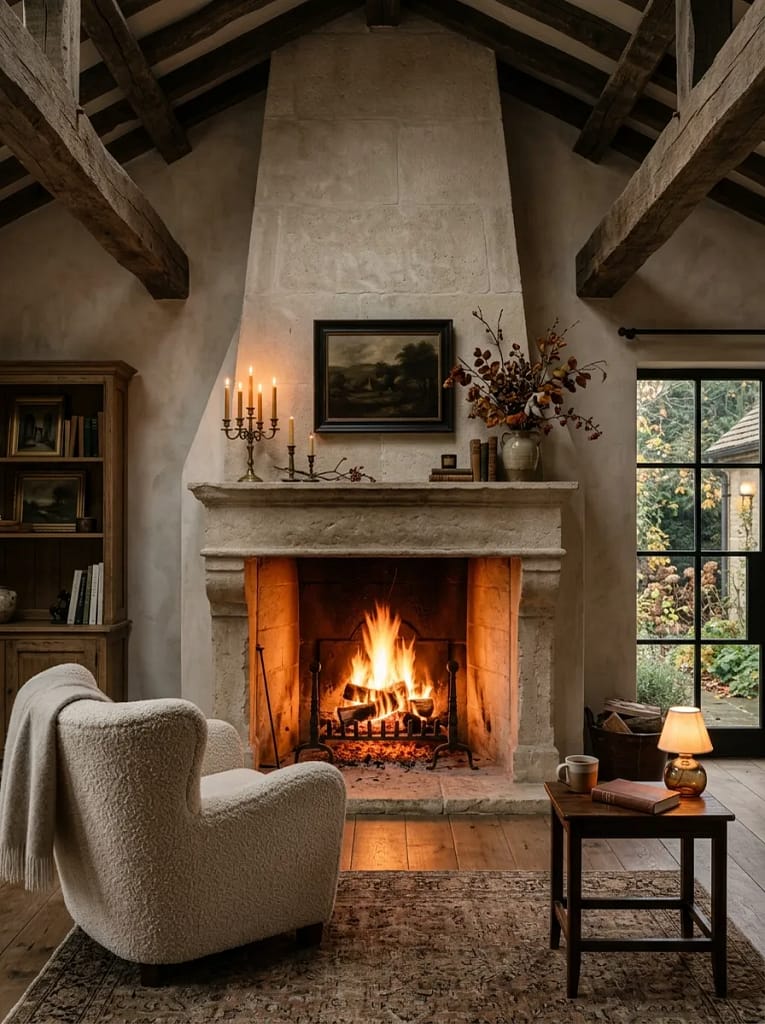
Every living room needs something that quietly takes control of the space. A statement fireplace does exactly that. Even when the fire isn’t burning, the surround becomes architecture instead of decoration. It anchors the room and naturally tells every sofa, chair, and coffee table where they belong.
Simple drywall fireplaces have their place, but renovation gives you the opportunity to think bigger. Floor-to-ceiling stone, oversized limestone surrounds, textured plaster, handmade brick, or dramatic marble slabs all create completely different personalities. The material should match how you want the room to feel instead of simply following current trends.
Avoid crowding the fireplace with excessive décor. A single oversized artwork, carefully chosen mirror, or sculptural vase often creates far more impact than shelves packed with accessories. Let the fireplace breathe so it remains the room’s strongest design feature.
3. Built-In Bookshelves
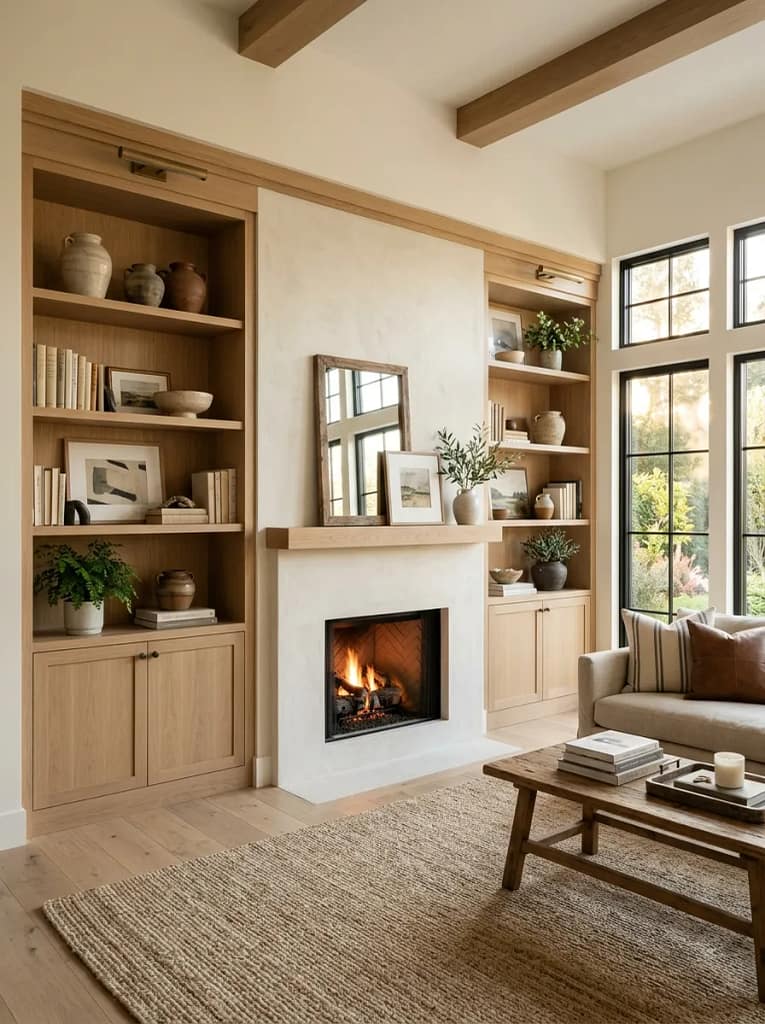
- Uses wall space efficiently.
- Provides display and storage together.
- Reduces furniture clutter.
- Adds architectural depth.
- Makes the room feel custom designed.
Blank walls rarely make a renovated living room memorable. Built-in bookshelves turn empty vertical space into something both useful and beautiful. They hold books, family photos, collected artwork, baskets, and everyday storage while making the entire room feel like it was designed specifically for your home.
Depth matters more than people realize. Shelves that vary slightly in height and spacing create a relaxed custom appearance instead of looking like store-bought cabinets. Closed lower cabinets hide board games, electronics, blankets, and seasonal decorations while open shelves above keep everything feeling lighter.
Don’t try to fill every shelf immediately. Empty space is part of good styling. Mixing books with pottery, greenery, and personal collections creates a balanced display that grows naturally over time instead of looking staged on day one.
4. Open-Concept Layout
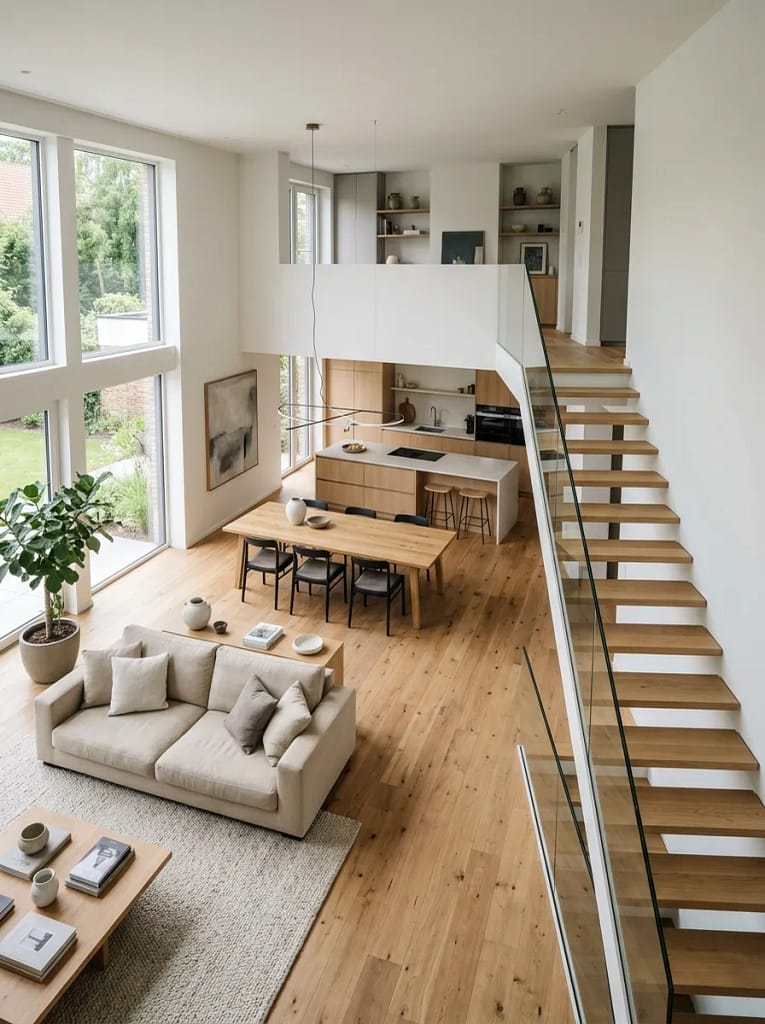
- Brings more natural light inside.
- Improves movement between rooms.
- Makes entertaining easier.
- Creates better furniture flexibility.
- Helps smaller homes feel bigger.
Walls have a job, but sometimes they also become the biggest obstacle inside a home. If your living room feels boxed in or disconnected from the kitchen or dining space, removing one carefully selected wall can completely change how the house functions. Suddenly conversations travel farther, sunlight reaches deeper into the room, and the entire floor plan feels more welcoming.
Before grabbing demolition tools, make sure the wall isn’t load-bearing without proper structural planning. Working with a contractor or structural engineer keeps the renovation safe while giving you options like hidden beams or decorative supports that blend into the finished design.
An open layout also changes how furniture should be arranged. Instead of pushing everything against the walls, use sofas, rugs, and lighting to naturally divide each area. The living room still feels defined, but the entire home gains a sense of openness that’s difficult to achieve with décor alone.
5. Larger Windows
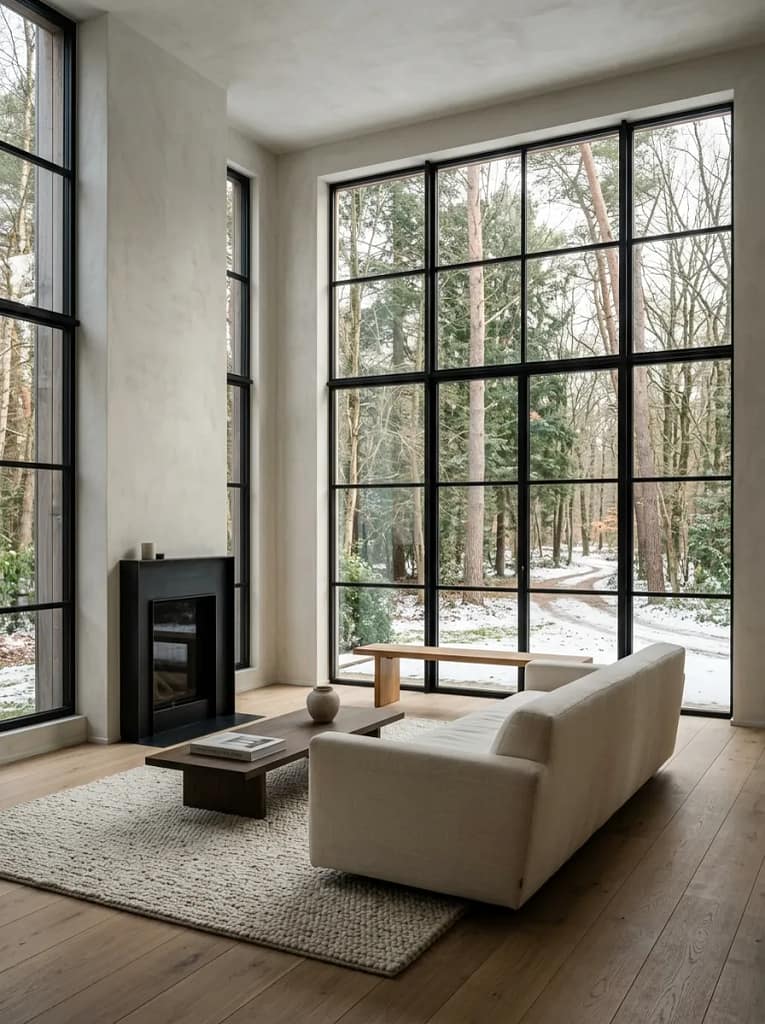
- Brightens the room naturally.
- Creates stronger outdoor views.
- Reduces dependence on artificial lighting.
- Makes ceilings appear taller.
- Adds long-term home value.
Light changes everything. Paint colors look better, furniture feels lighter, and the room itself seems to grow without adding a single square foot. Replacing smaller windows with larger ones is one of the biggest visual upgrades a living room renovation can include.
Picture sitting on the sofa while morning sunlight fills the room instead of stopping halfway across the floor. Bigger windows also frame gardens, patios, trees, or city views like living artwork. That connection between inside and outside creates a calmer atmosphere throughout the day.
Also Read: 22 Backyard Potluck Table Ideas for Easy Entertaining
Choose slim window frames whenever possible to maximize glass area. Black frames create modern contrast, while white frames blend quietly into traditional interiors. Finish the look with simple linen curtains that soften the light without blocking it completely.
6. Wood Beam Ceiling
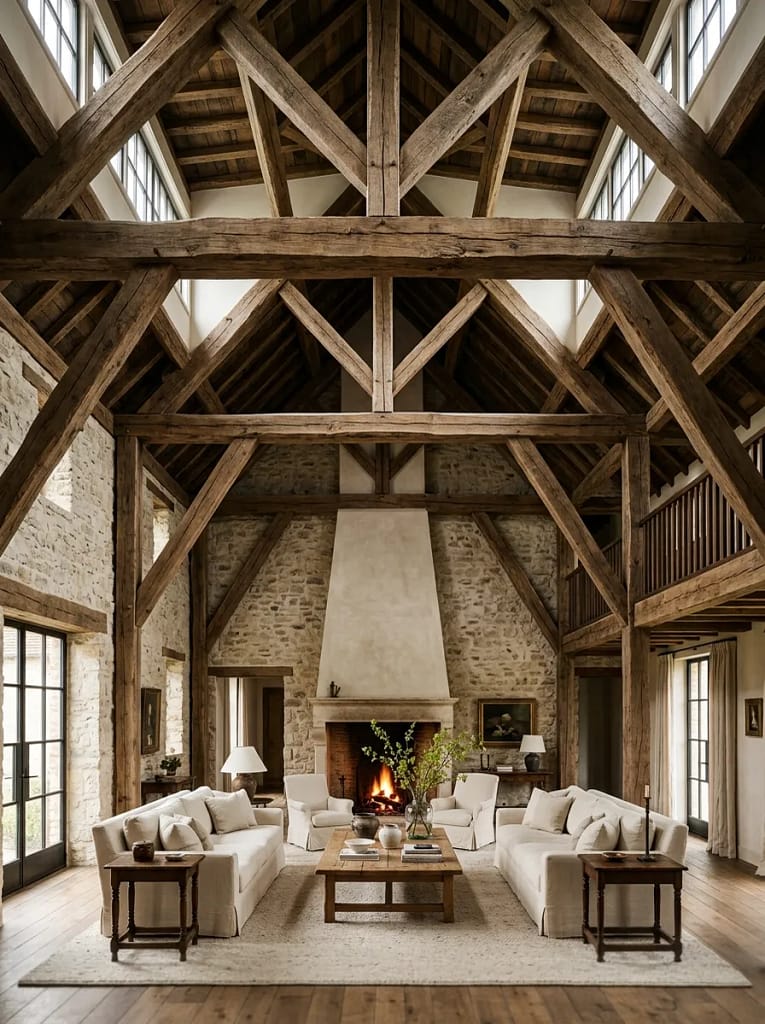
- Adds instant architectural character.
- Draws attention upward.
- Brings warmth to large rooms.
- Works with many design styles.
- Makes flat ceilings more interesting.
Most people decorate walls and floors. Very few think about the ceiling. That’s exactly why exposed wood beams leave such a strong impression. They introduce texture in a place that’s often ignored and make the entire living room feel custom built.
Solid reclaimed beams offer authentic charm, while lightweight faux beams provide a similar appearance without requiring major structural work. Depending on the stain color, beams can lean rustic, modern farmhouse, Scandinavian, or contemporary.
Balance is important. Heavy dark beams work best in rooms with taller ceilings, while lighter wood keeps average-height ceilings feeling open. A few carefully placed beams usually create more impact than covering the entire ceiling.
7. Smart Recessed Lighting
- Eliminates dark corners.
- Keeps ceilings looking clean.
- Provides flexible lighting zones.
- Highlights artwork and architecture.
- Works well with smart home systems.
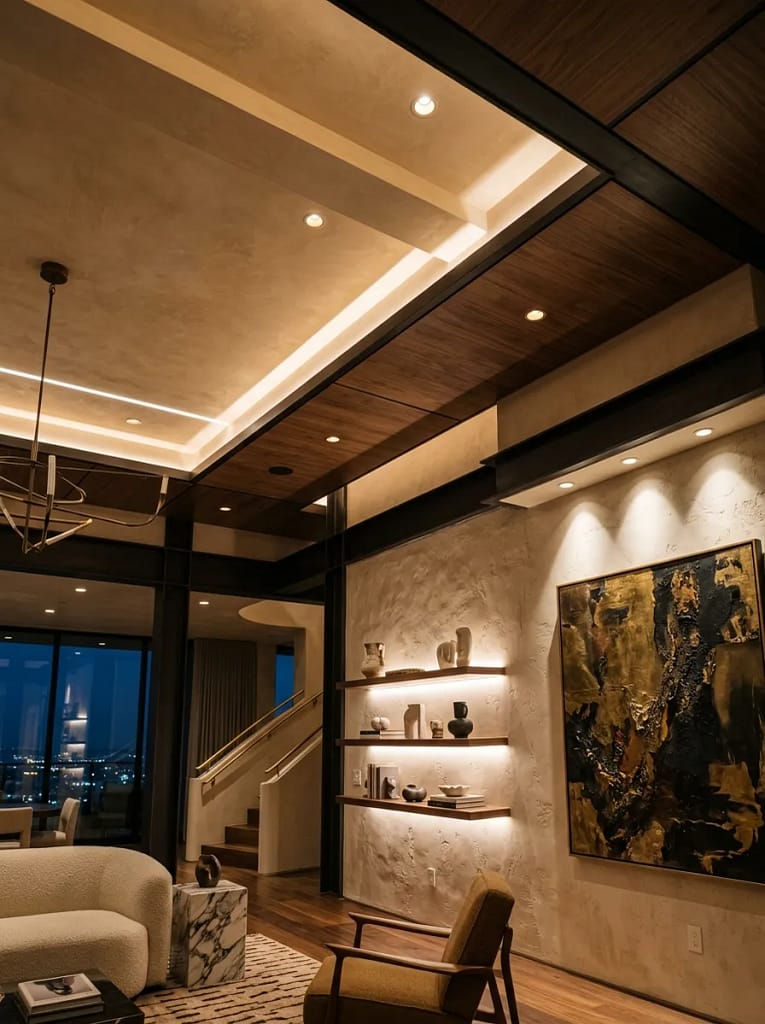
Bad lighting can ruin a beautiful renovation. One bright ceiling fixture often leaves shadows exactly where you don’t want them. Recessed lighting solves that problem by spreading light evenly across the living room without drawing attention to the fixtures themselves.
Instead of installing lights in a simple grid, think about how you actually use the room. Place lights over seating areas, reading corners, artwork, fireplaces, and walkways. Dimmers allow the atmosphere to shift from bright family activities during the day to relaxed movie nights after sunset.
Connecting recessed lighting to smart controls makes everyday living even easier. Different lighting scenes can be activated with one button instead of adjusting individual switches every evening.
8. Modern Wall Trim
- Gives plain walls architectural detail.
- Makes the room feel professionally finished.
- Adds value without major construction.
- Complements both modern and classic homes.
- Creates beautiful paint definition.
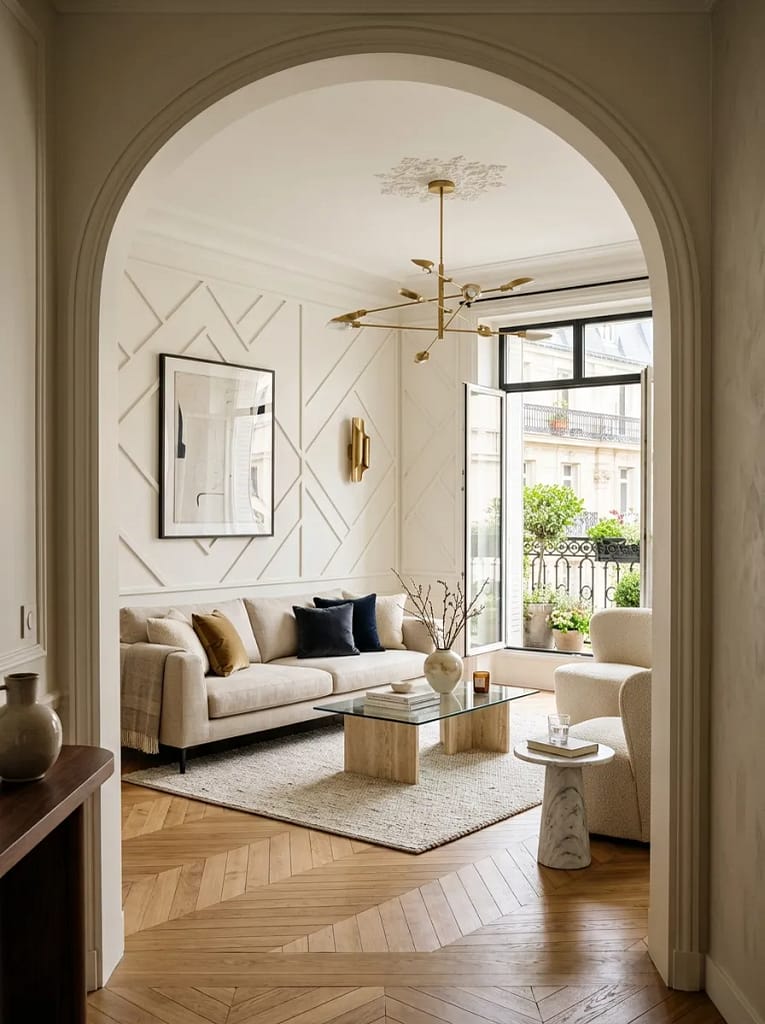
Sometimes a living room doesn’t need more furniture. It simply needs stronger walls. Modern wall trim introduces depth and visual interest while keeping the overall design clean and elegant. Even simple rectangular molding patterns completely change how a room feels.
Thin profile trim painted the same color as the wall creates subtle texture, while contrasting colors highlight every panel for a bolder statement. Larger rooms often benefit from oversized molding layouts, while smaller spaces usually look better with simpler designs.
Keep furniture relatively clean-lined once decorative trim is installed. Too many competing details can make the room feel busy. Let the walls become part of the architecture instead of merely serving as a background.
9. Window Seat Storage
- Turns unused space into seating.
- Adds hidden storage underneath.
- Creates a relaxing place to unwind.
- Brings charm to any living room.
- Makes better use of natural light.
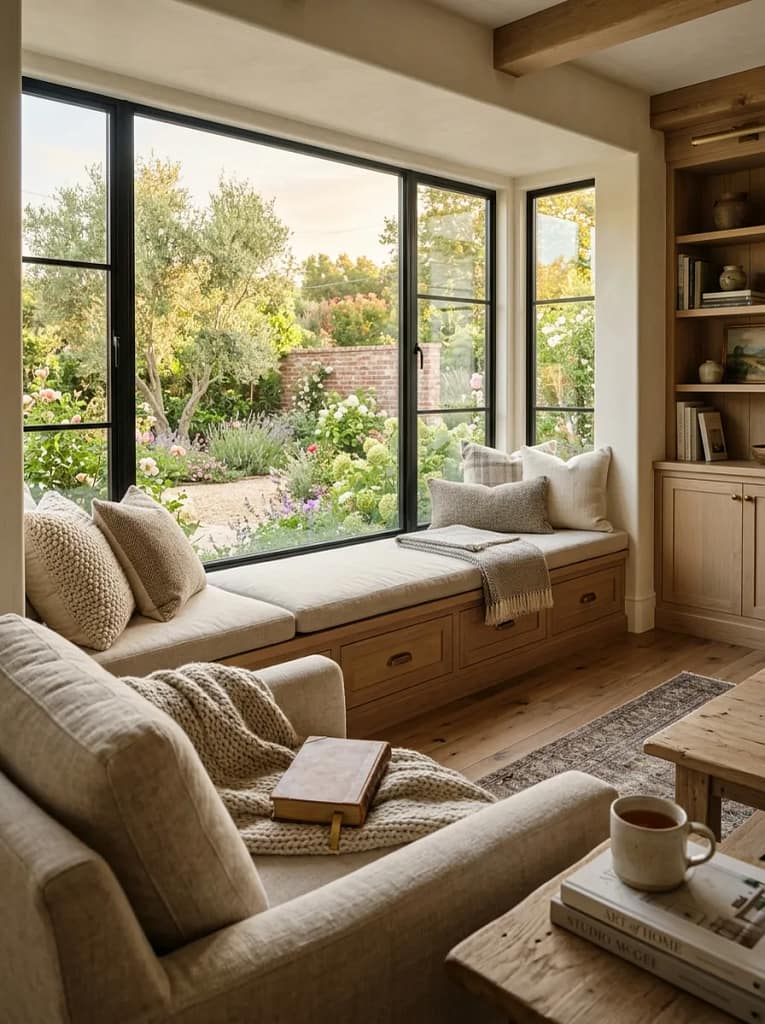
There’s something inviting about sitting beside a window with a book, a blanket, and a cup of coffee. A built-in window seat captures that feeling while solving two common renovation problems at once: adding seating and increasing storage.
Deep drawers or lift-up compartments beneath the bench provide an ideal place for extra blankets, board games, seasonal pillows, or children’s toys. Everything stays close by without filling valuable floor space with extra cabinets.
Finish the bench with comfortable cushions, layered pillows, and nearby lighting so it becomes more than just another seat. It becomes the quiet corner everyone naturally chooses first.
10. Custom Media Wall
- Keeps electronics organized.
- Hides visible cables.
- Creates one clean focal point.
- Increases storage.
- Makes the room feel built specifically for your home.
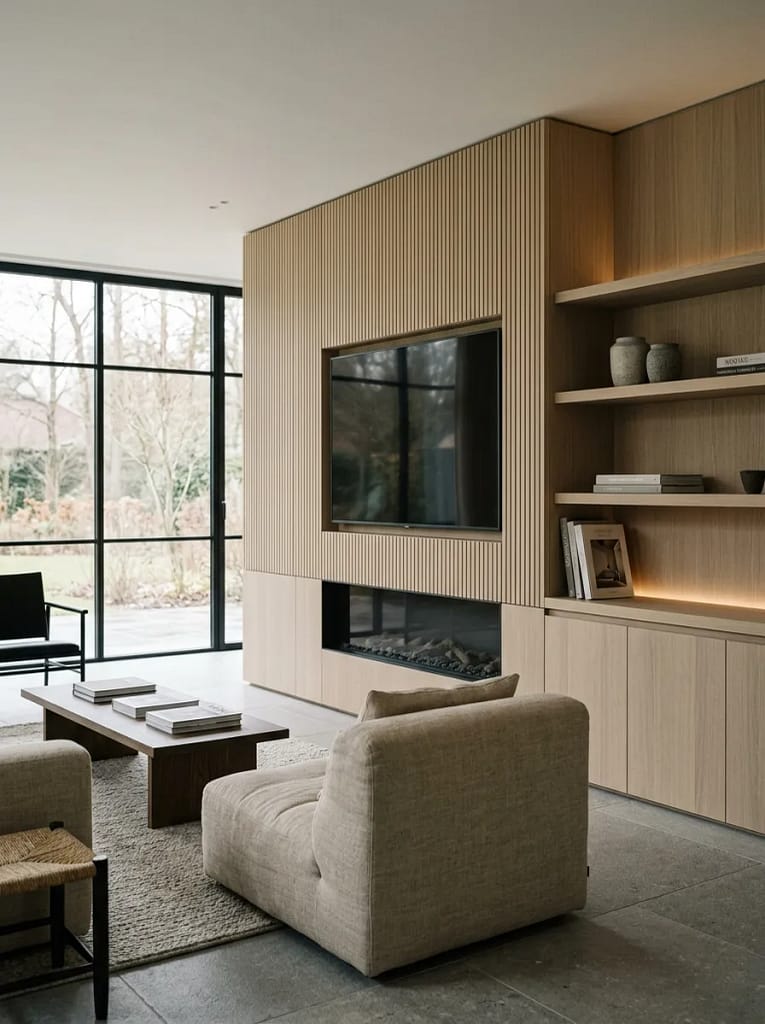
Televisions often become the largest object in the living room, yet many look like they were added as an afterthought. A custom media wall changes that completely by integrating technology into the overall renovation instead of letting it dominate the room.
Also Read: 20 Bedroom Cooling Ideas for Better Sleep All Night
Built-in cabinets below hide gaming consoles, speakers, routers, and everyday clutter. Floating shelves provide room for books, plants, or artwork without distracting from the television itself. Hidden cable management keeps everything looking clean from every angle.
Instead of making the TV the only thing people notice, surround it with balanced materials like wood panels, painted cabinetry, stone, or textured finishes. The entire wall becomes one carefully designed feature that improves both function and appearance.
11. Limewash Walls
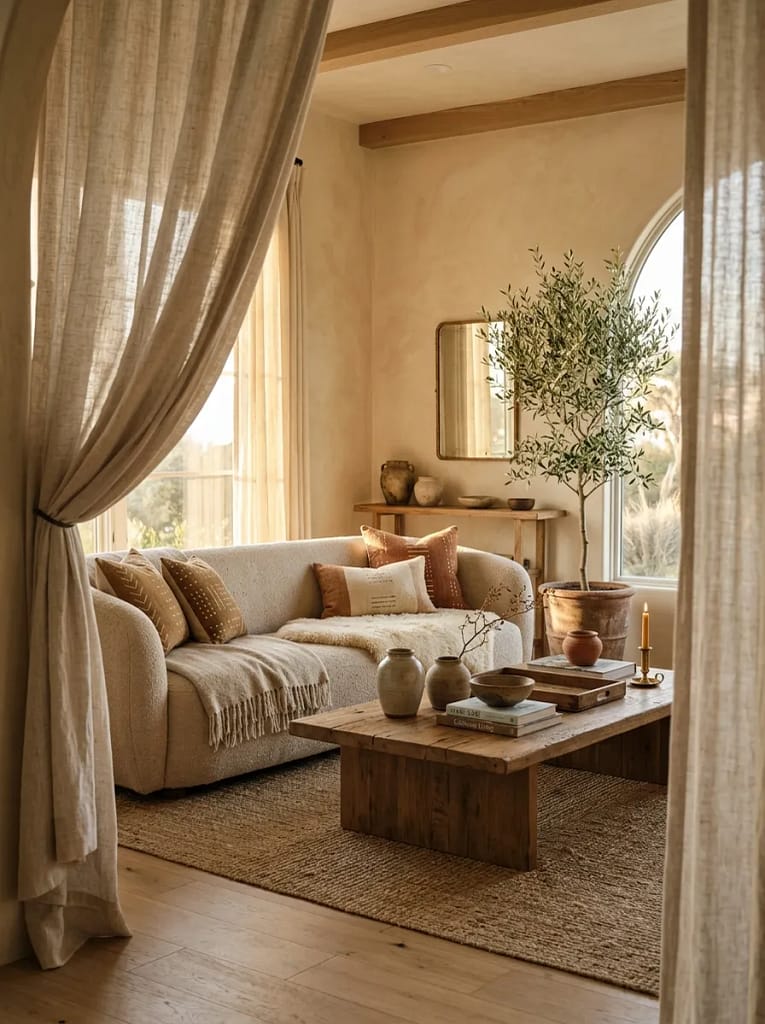
- Gives walls soft natural texture.
- Reflects light in a gentle way.
- Hides minor wall imperfections.
- Adds depth without bold patterns.
- Ages beautifully over time.
Paint usually sits flat. Limewash behaves differently. As sunlight moves across the room, the finish shifts with it, creating soft movement that ordinary paint simply can’t achieve. That’s why so many high-end renovations have started using limewash instead of perfectly smooth painted walls.
This finish works especially well in living rooms that already have natural materials like wood, linen, stone, or leather. Instead of competing with furniture, limewash becomes part of the background, adding richness without demanding attention. Warm whites, creamy beiges, muted taupes, and earthy greige shades feel timeless and comfortable.
Because the finish has natural variation, every wall becomes slightly unique. Don’t chase perfection. Small differences are exactly what give limewash its charm and make the renovation feel handcrafted rather than factory finished.
12. Designer Wall Radiators
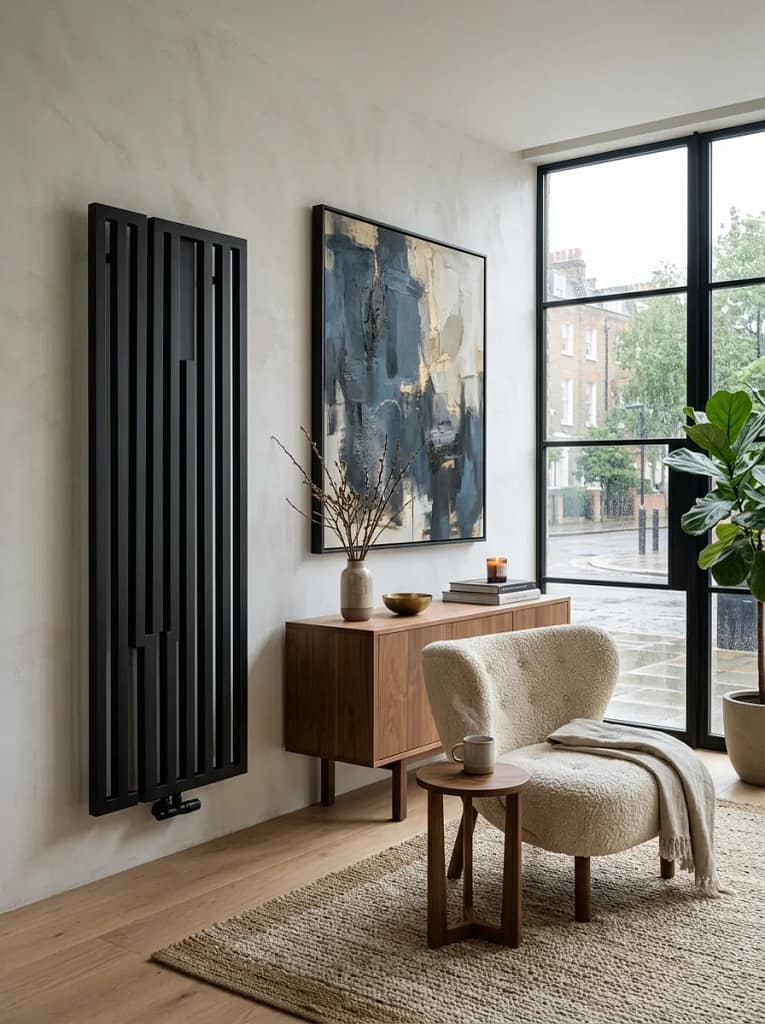
- Adds warmth with modern style.
- Saves valuable floor space.
- Becomes part of the décor.
- Available in many finishes.
- Blends function with design.
Heating doesn’t have to be something you hide. Older radiators often interrupt a beautifully renovated living room, but modern designer versions do the opposite. Many look more like sculptural wall art than traditional heating units.
Slim vertical radiators work well in tighter layouts because they free up wall space for furniture. Matte black creates bold contrast, while white versions almost disappear into lighter walls. Brushed metal finishes bring a contemporary edge without feeling cold.
Think about placement early in the renovation instead of treating heating as an afterthought. A carefully positioned radiator keeps the room comfortable while allowing the rest of the layout to function naturally.
13. Skylight Addition
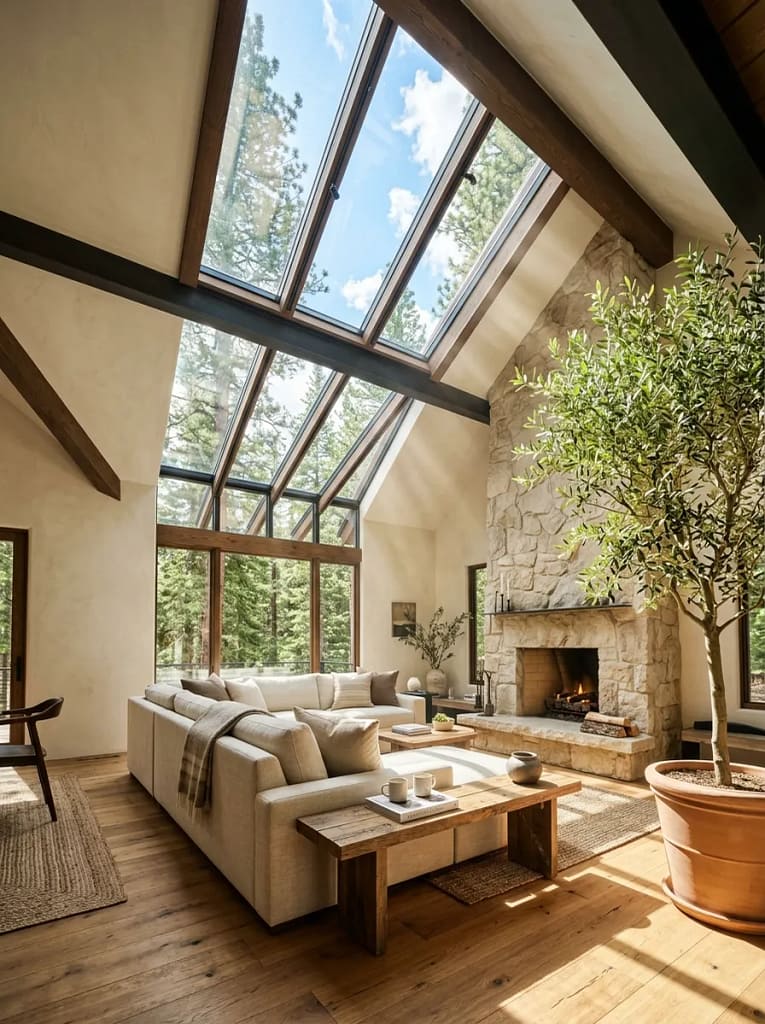
- Brings daylight deep into the room.
- Makes ceilings feel higher.
- Reduces daytime lighting needs.
- Connects the room to the sky.
- Creates a brighter atmosphere all year.
Windows brighten walls. Skylights brighten everything.
Adding a skylight changes how natural light enters the living room because the sunlight comes from above rather than one side. Even cloudy days often feel brighter, making the room more cheerful throughout the year. Morning light becomes softer, while afternoon shadows feel less heavy.
Modern skylights offer energy-efficient glazing, rain sensors, and remote-controlled ventilation. Some even open automatically to improve airflow during warmer months. Positioning the skylight above the main seating area or central walkway spreads light more evenly across the entire room.
The result isn’t just a brighter renovation. The whole living room feels more open, calmer, and surprisingly larger.
14. Oversized Interior Doors
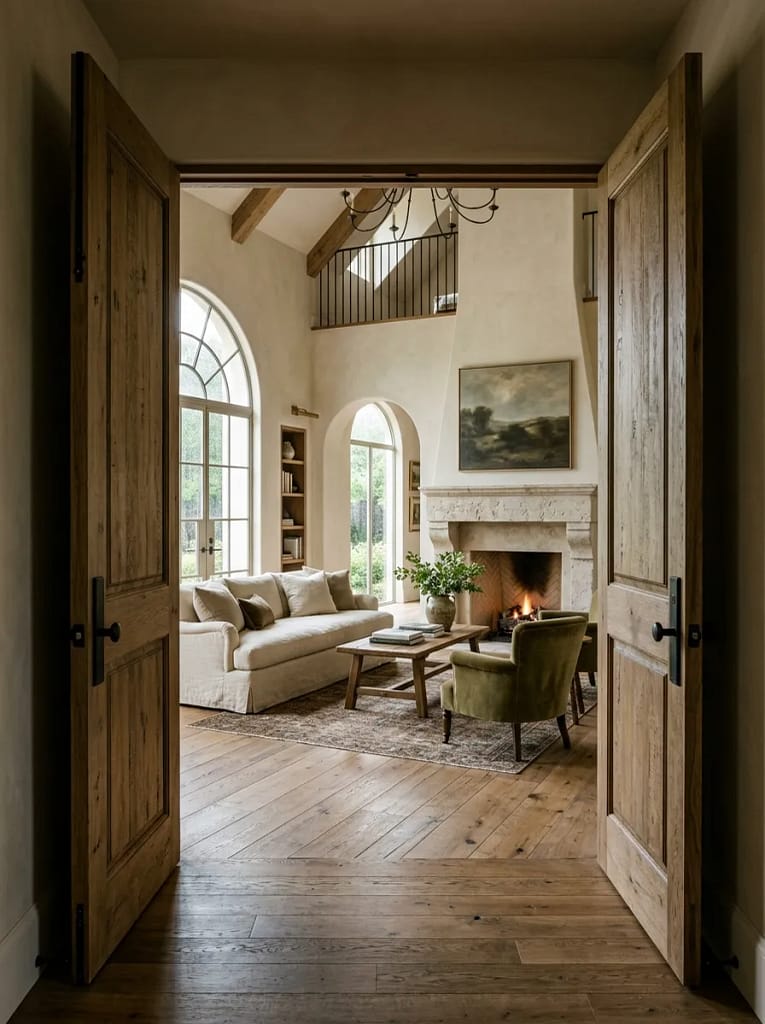
- Makes rooms feel more luxurious.
- Improves visual flow.
- Creates stronger first impressions.
- Allows more natural light to travel.
- Enhances modern renovations.
Most people notice oversized doors without realizing why they like them. Taller doors quietly change the proportions of a room, making standard ceilings appear higher while creating smoother transitions between spaces.
Eight-foot doors have become increasingly popular because they give homes a custom-built appearance. Minimal trim, flush panels, or simple shaker profiles all work beautifully depending on the renovation style. Large glass doors between rooms also help maintain openness while still defining separate spaces.
Replacing every door isn’t always necessary. Updating the main living room entrances alone often delivers enough impact to elevate the entire renovation.
15. Cozy Reading Nook
- Creates a peaceful place to unwind.
- Encourages everyday relaxation.
- Makes unused corners functional.
- Adds personality to the room.
- Works in both large and small spaces.
Not every part of the living room needs to revolve around the television.
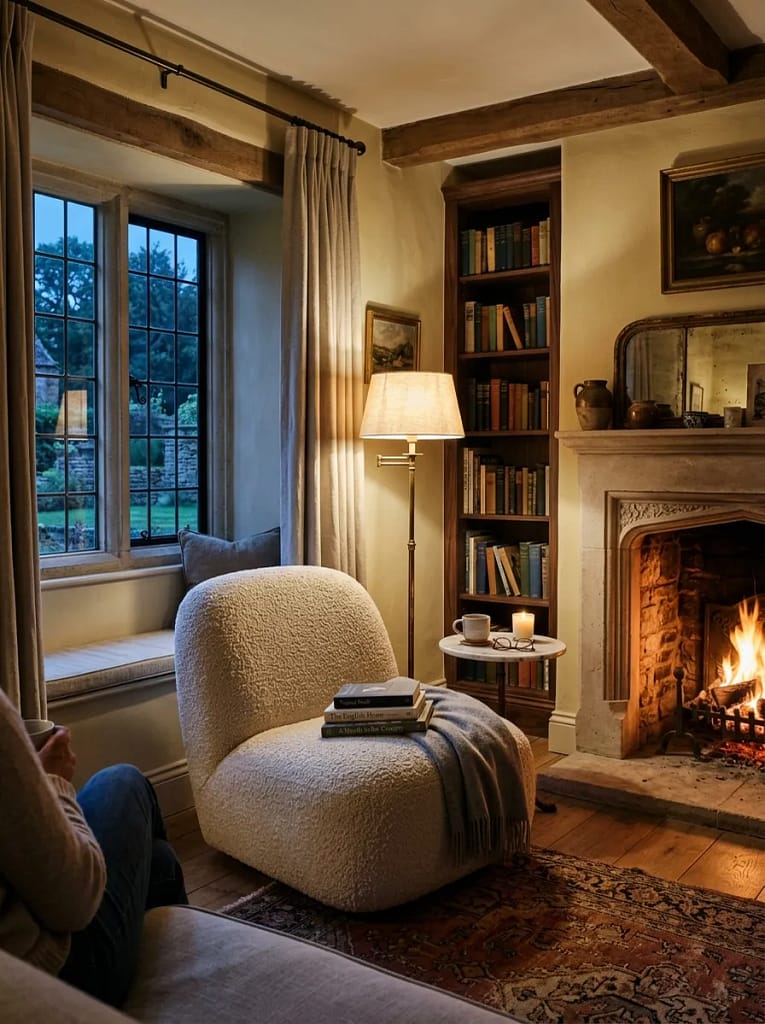
A quiet reading nook gives the room another purpose while making daily life a little slower. Sometimes the perfect location already exists. An empty corner beside a window, a space beneath built-in shelving, or an unused section near the fireplace can become a favorite place to escape for twenty minutes with a good book.
Comfort comes first. Start with one supportive chair, a soft throw blanket, proper reading light, and a small side table. Add a basket for books and maybe one plant nearby. That’s enough.
The best reading nooks never look overdesigned. They simply invite someone to sit down without thinking twice.
16. Floating LED Shelves
- Displays décor without bulky furniture.
- Adds soft evening lighting.
- Frees up floor space.
- Highlights personal collections.
- Gives the room a modern finish.
Walls can work harder than most people expect.
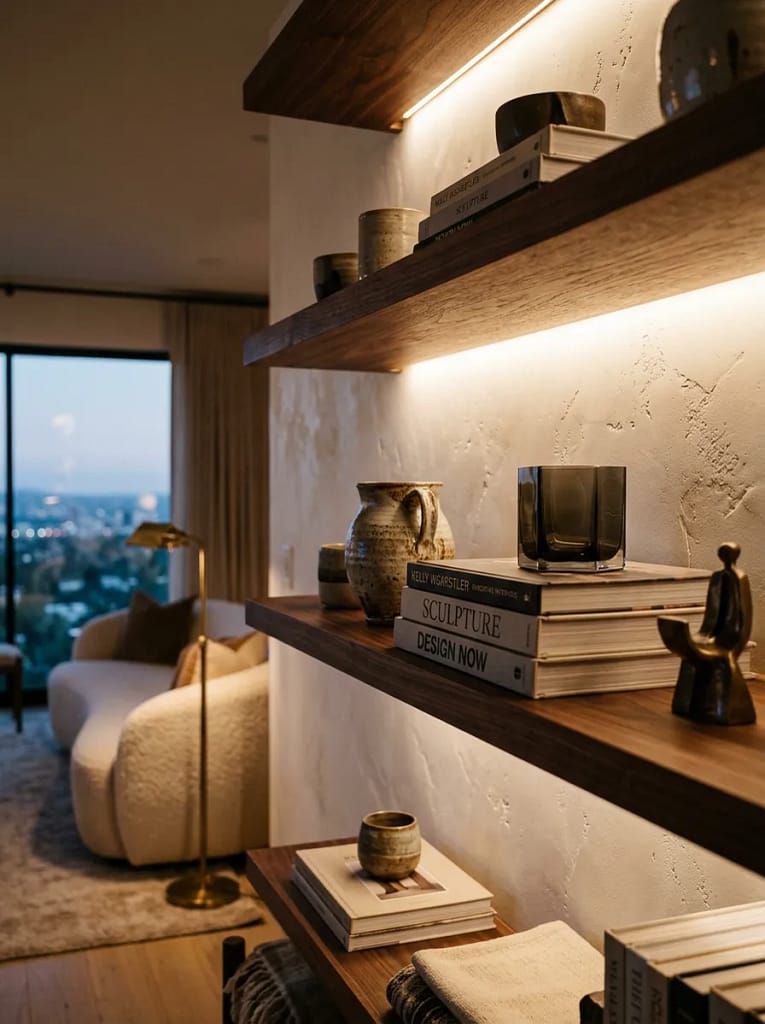
Floating LED shelves let you decorate vertically while adding gentle lighting at the same time. During the day, they hold books, artwork, ceramics, or plants. At night, hidden LED strips create a warm glow that makes the living room feel calmer without switching on bright ceiling lights.
Keep the styling simple. A few carefully chosen objects always look stronger than shelves packed from one end to the other. Mixing books with natural textures like wood, woven baskets, or pottery creates balance while allowing each item enough space to stand out.
Installing shelves around a media wall, beside a fireplace, or inside recessed wall niches helps the entire renovation feel custom instead of standard.
17. Folding Glass Doors
- Opens the home to outdoor spaces.
- Brings in fresh air.
- Increases natural light.
- Makes entertaining easier.
- Creates a seamless indoor-outdoor connection.
Some renovations don’t make the room bigger.
They simply remove the barrier.
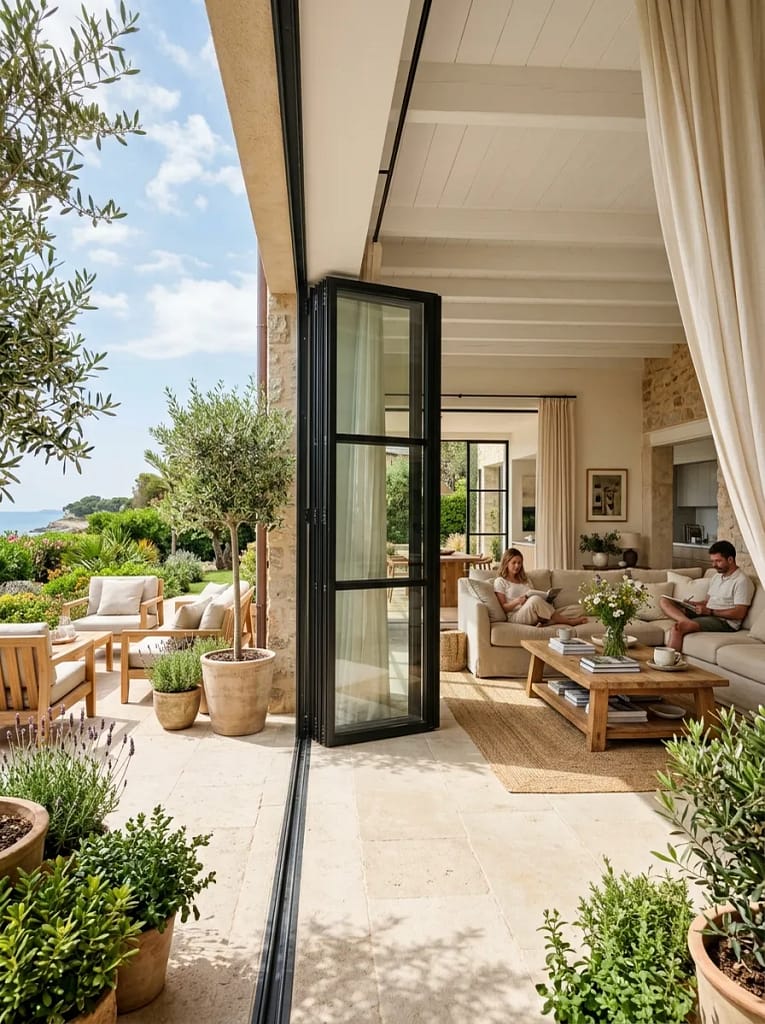
Folding glass doors completely change how a living room interacts with the backyard, patio, or garden. On pleasant days, the doors fold away almost entirely, allowing inside and outside to become one continuous living space. Family gatherings suddenly have twice the usable room without adding a single square foot.
Slim aluminum frames maximize the glass while keeping the overall appearance clean and modern. High-performance glazing also improves insulation, helping the room stay comfortable throughout the year.
Even when closed, the larger glass surface fills the living room with daylight and garden views that standard sliding doors often can’t provide.
18. Modern Ceiling Light
- Creates an eye-catching centerpiece.
- Improves overall lighting quality.
- Defines the seating area.
- Completes the renovation visually.
- Adds personality overhead.
Many living rooms receive new floors, new walls, and new furniture.
Then the old ceiling light stays.
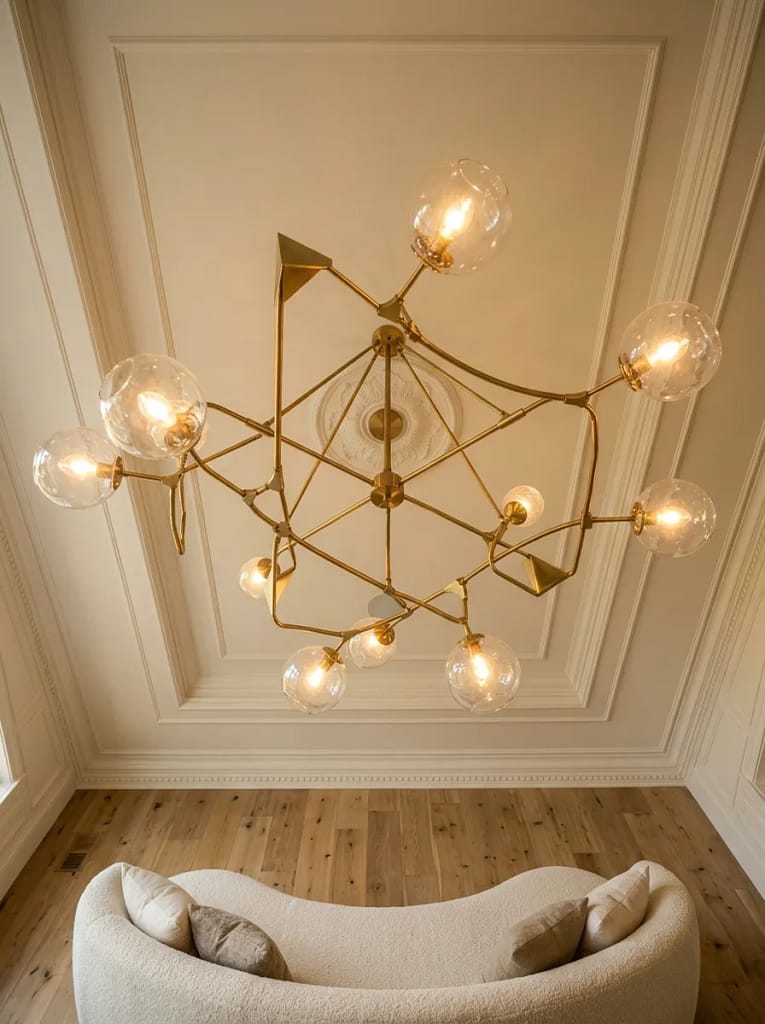
A modern fixture immediately tells people the renovation is complete. Whether it’s sculptural, minimalist, or softly organic, the ceiling light naturally becomes one of the first details guests notice after entering the room.
Scale matters more than style. Small fixtures often disappear inside larger living rooms, while oversized lighting creates confidence and balance. Hanging the fixture directly above the main seating area visually connects the furniture beneath it.
Pair decorative lighting with recessed lights and floor lamps so the room stays functional during every part of the day instead of depending on one single source.
19. Wood Slat Accent Wall
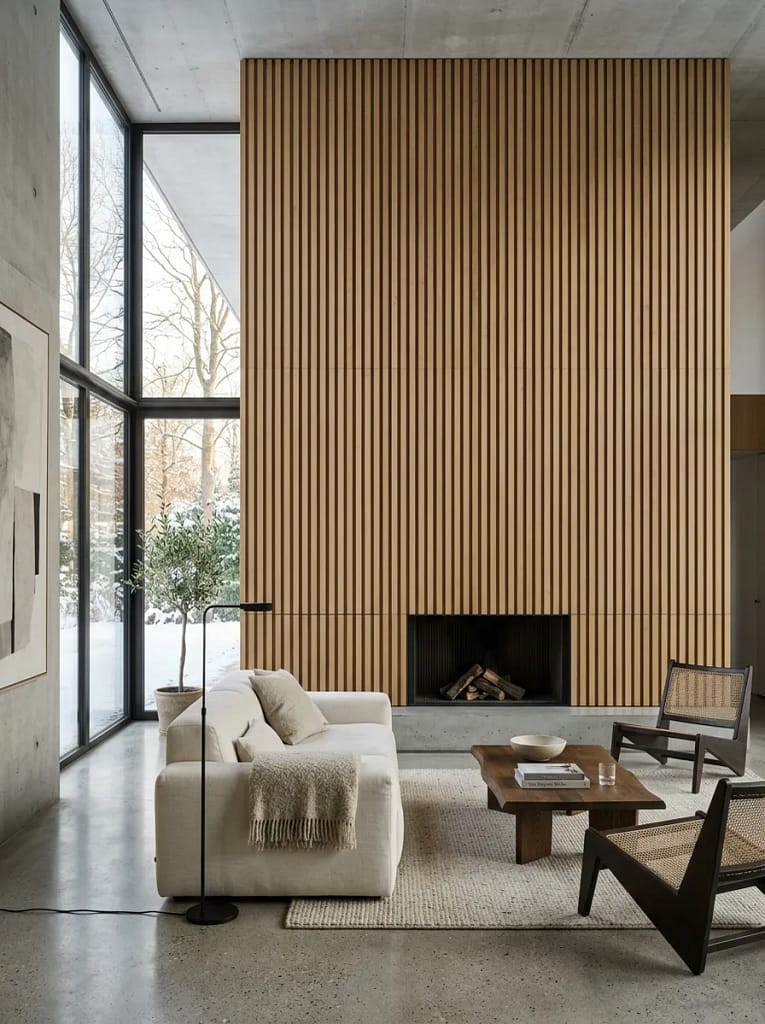
- Introduces natural texture.
- Adds warmth without bold colors.
- Improves visual depth.
- Fits modern and Scandinavian interiors.
- Creates an architectural feature.
Sometimes paint isn’t enough.
A wood slat accent wall gives the living room texture that changes as sunlight moves throughout the day. Thin vertical slats naturally pull the eye upward, making average ceilings appear taller while adding warmth that flat drywall simply cannot match.
Oak, walnut, ash, or stained pine all create different moods. Light woods feel bright and Scandinavian, while darker stains introduce richness without overwhelming the room. Black felt backing between slats adds subtle shadow lines while also helping improve sound absorption.
Using the slat wall behind a television, fireplace, or sofa creates one clear focal point without relying on excessive decoration.
Also Read: 23 Outdoor Picnic Area Ideas for Backyard Gatherings
20. Hidden Storage Cabinets
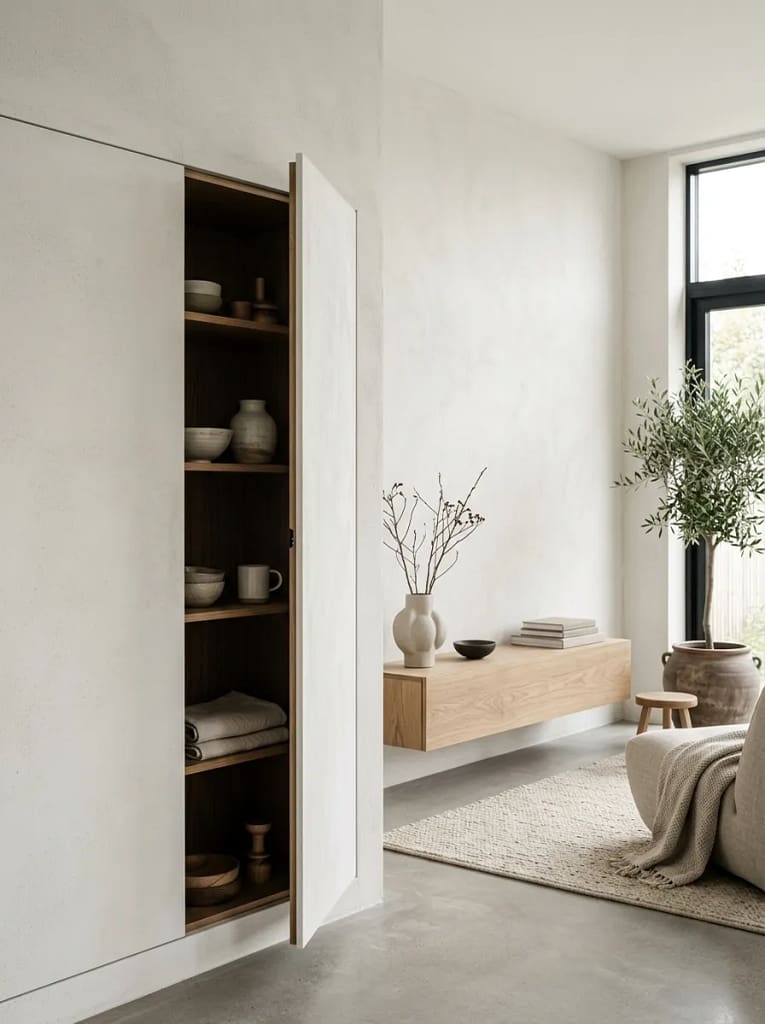
- Keeps everyday clutter out of sight.
- Maintains a clean appearance.
- Makes organization easier.
- Blends into surrounding walls.
- Increases practical storage.
Beautiful living rooms usually have one thing in common.
You don’t see the mess.
Hidden storage cabinets make that possible. Instead of leaving games, electronics, blankets, paperwork, children’s toys, and charging cables visible, everything disappears behind seamless cabinetry that blends into the walls.
Push-to-open doors eliminate bulky handles and help cabinets almost disappear when painted the same color as the surrounding walls. Inside, adjustable shelves make it easy to organize changing storage needs over time.
The room feels calmer because your eyes focus on furniture, lighting, and architecture instead of everyday clutter waiting to be cleaned up.
21. Stone Feature Wall
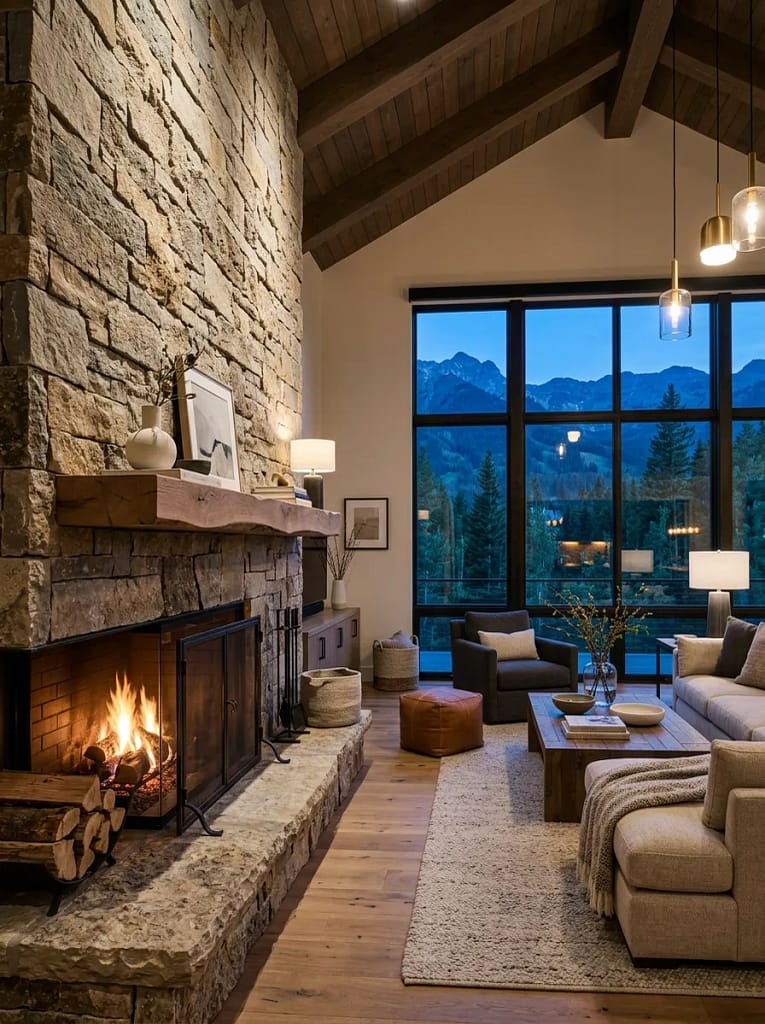
- Creates a dramatic focal point.
- Adds timeless natural texture.
- Works with many renovation styles.
- Balances soft furnishings beautifully.
- Increases visual character.
Natural stone has a presence that manufactured materials rarely achieve.
Whether installed behind the fireplace or across one full wall, stone immediately gives the living room weight and permanence. Every piece carries slightly different texture and color, making the finished wall feel unique rather than mass-produced.
Limestone offers soft elegance, stacked slate creates strong texture, and large-format travertine brings a quieter contemporary appearance. Keeping the surrounding décor restrained allows the stone to become the hero without competing for attention.
Finish the renovation with warm lighting aimed across the stone surface instead of directly at it. The gentle shadows reveal every ridge and texture, giving the living room depth that continues to look beautiful both during the day and after sunset.
Frequently Asked Questions
1. Where should I start when planning a living room renovation?
Start with the biggest changes first. Flooring, layout, windows, and built-in features should come before paint, furniture, or decorations. Building the room in the right order prevents expensive changes later.
2. Which living room renovation adds the most value?
Hardwood flooring, larger windows, built-in storage, an updated fireplace, and improved lighting usually offer the strongest return. These upgrades improve both appearance and everyday function, making the home more attractive to future buyers.
3. How much does a living room renovation usually cost?
The budget depends on the work involved. Cosmetic updates like paint and lighting cost far less than removing walls, replacing windows, or installing custom cabinetry. Planning priorities before starting helps control overall expenses.
4. Is an open-concept living room worth it?
For many homes, yes. Opening the layout allows more light to travel through the house and makes everyday living feel less restricted. Before removing any wall, always confirm whether it supports the structure of the home.
5. What flooring is best for a renovated living room?
Hardwood remains one of the most popular choices because it lasts for many years and fits almost every design style. Engineered hardwood also performs well where humidity changes throughout the year.
6. How can I make my living room feel larger without building an addition?
Focus on larger windows, lighter wall colors, better lighting, taller doors, and reducing unnecessary furniture. Small design decisions often make a room feel much more spacious without changing the footprint.
7. Should built-in storage be included in a renovation?
Yes. Hidden cabinets, bookshelves, window seats, and media walls help reduce clutter while making better use of available space. Custom storage often becomes one of the most appreciated parts of the renovation.
8. What lighting should every renovated living room have?
A balanced combination works best. Recessed ceiling lights provide general brightness, decorative fixtures add personality, floor lamps improve reading areas, and accent lighting highlights architectural features.
9. Which wall treatments are popular in modern living rooms?
Wood slat walls, limewash finishes, stone feature walls, decorative trim, and textured plaster remain popular because they introduce depth without relying on bold colors or busy wallpaper.
10. How do I keep a renovated living room looking timeless?
Choose quality materials over short-lived trends. Natural wood, stone, neutral colors, comfortable furniture, and thoughtful lighting continue to look attractive long after decorating trends change.
Conclusion
A successful living room renovation isn’t about filling the space with expensive furniture or following every new trend. The biggest improvements usually come from stronger foundations. Better flooring, smarter lighting, useful storage, natural materials, and a layout that supports everyday life create a room people genuinely enjoy spending time in.
Think about how your family actually uses the space before making design decisions. Maybe you need more storage instead of more shelving. Maybe larger windows will improve the room more than another piece of furniture. Every renovation should solve real problems while making the room feel warmer, brighter, and easier to live in.
Whether you tackle one project at a time or complete a full renovation, these 21 living room renovation ideas give you practical ways to improve both style and function. The result is a space that feels comfortable every day, welcomes guests effortlessly, and continues to look good for years instead of just following today’s trends.
Visit sageandshelf for more details.