20 Bedroom Cooling Ideas for Better Sleep All Night
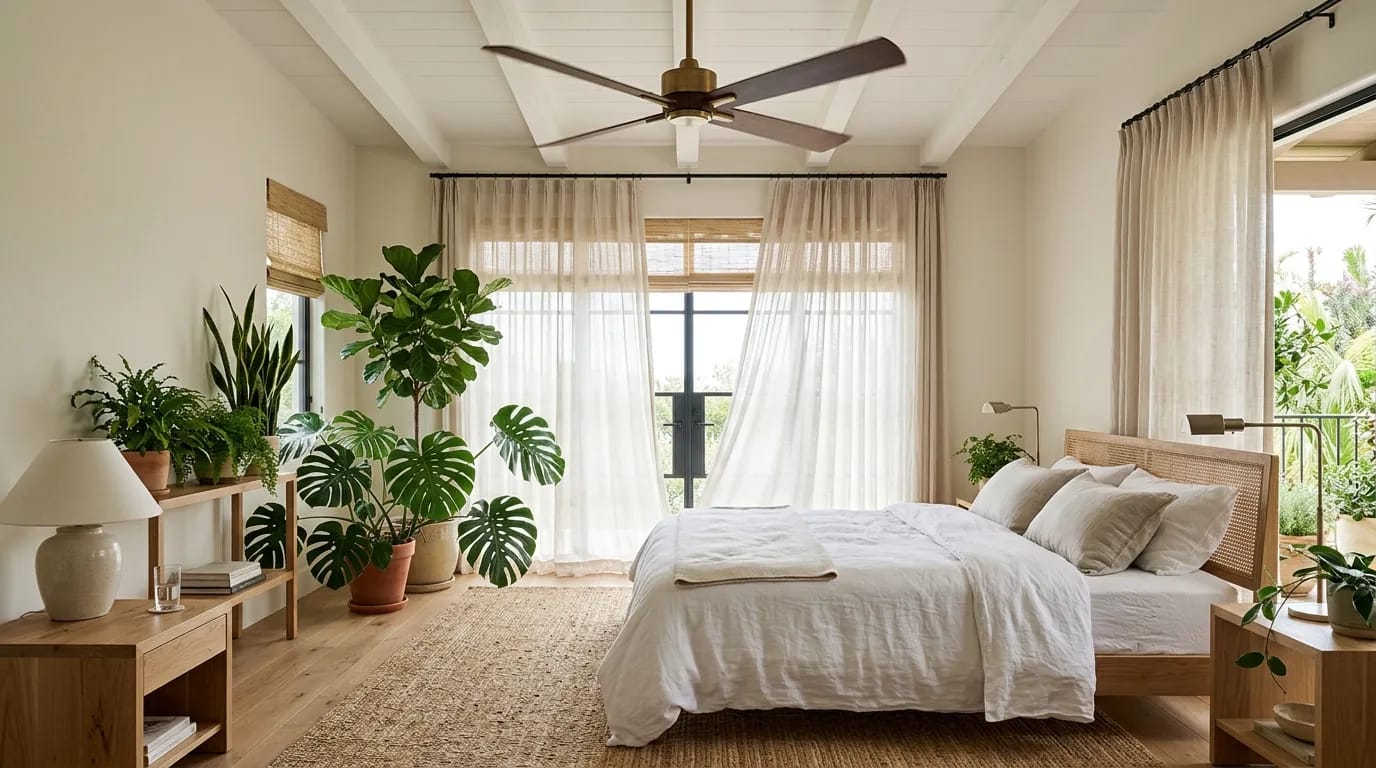
A hot, stuffy bedroom can make it difficult to fall asleep and stay comfortable throughout the night. The good news is that bedroom cooling does not always require expensive air conditioning upgrades or a complete bedroom makeover. A few thoughtful changes can help create a fresher, cooler, and more relaxing space that supports better sleep every night.
From breathable bedding and improved airflow to smart window treatments and lighter color palettes, there are many simple ways to reduce heat while making your bedroom look more beautiful at the same time. Many of these décor ideas are affordable, beginner-friendly, and easy to complete over a weekend without major renovations.
In my observation, the biggest improvements usually come from combining several small updates instead of searching for one perfect solution. Blocking afternoon sunlight, allowing fresh evening air to circulate, and choosing lightweight natural fabrics often work together to create a noticeable difference in comfort. Whether you are preparing for summer or simply want a more restful sleeping environment year-round, these inspiring ideas will help you create a bedroom that feels cooler, calmer, and more inviting every single night.
1. Blackout Curtains
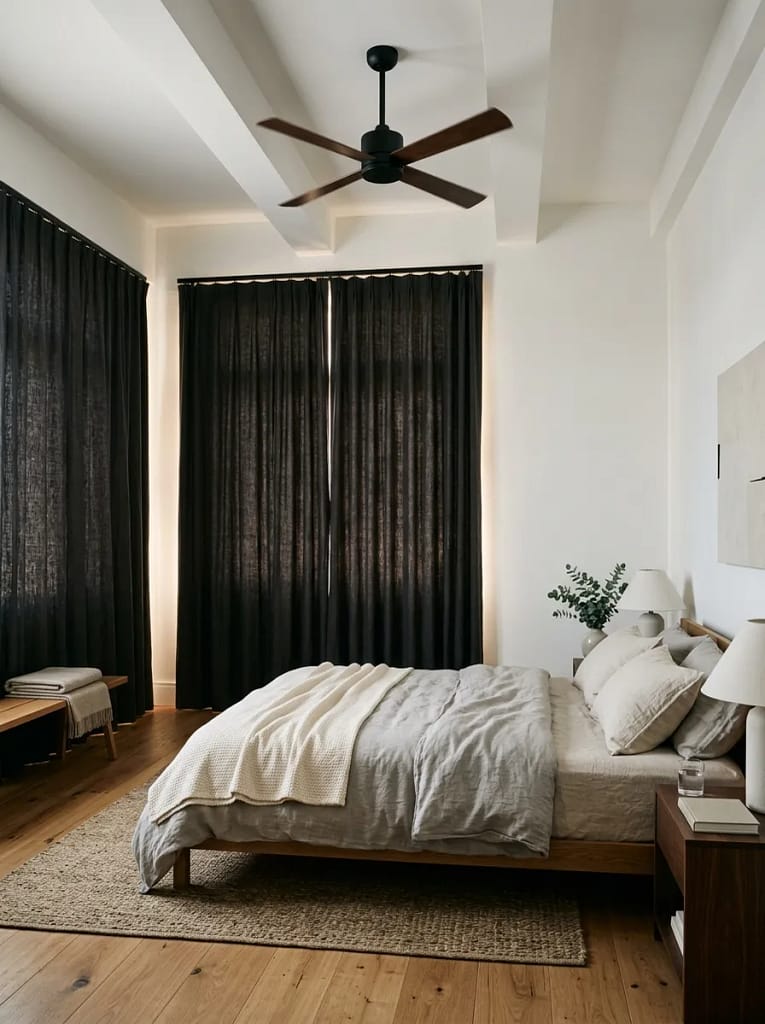
What this idea adds:
- Blocks harsh early morning sunlight for a darker sleeping space.
- Helps reduce heat entering through sunny windows.
- Creates a calmer, hotel-inspired bedroom atmosphere.
- Pairs easily with both modern and traditional décor styles.
A darker room naturally encourages longer, more restful sleep, especially during bright summer mornings. Blackout curtains also reduce the amount of sunlight that warms the room throughout the day, making nighttime conditions feel noticeably more comfortable. For many homes, this simple upgrade offers one of the easiest ways to improve bedroom cooling without changing furniture or installing new equipment. Look for tightly woven fabrics that extend slightly beyond the window frame to minimize light leaks around the edges.
I’ve noticed that bedrooms with properly fitted blackout curtains often feel more peaceful even before bedtime begins. Besides keeping the room darker, the extra fabric creates a softer, quieter atmosphere by reducing outside noise slightly. If your window faces west, this change can make an even bigger difference because afternoon sun tends to raise indoor temperatures. Choose neutral colors if you want a timeless look, or deeper tones for a cozy retreat that feels inviting throughout every season.
2. Ceiling Fan Upgrade
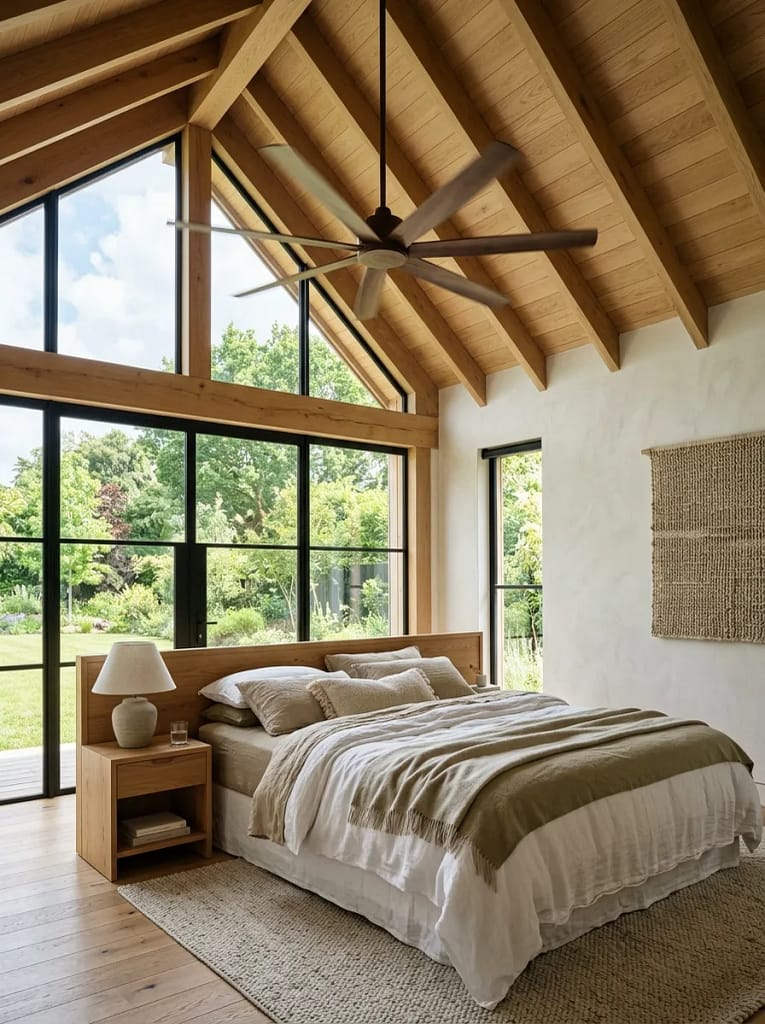
What this idea adds:
- Keeps air moving throughout the room.
- Makes warm nights feel more comfortable.
- Uses less energy than running air conditioning alone.
- Complements nearly any bedroom style.
Moving air across the room helps your body release heat more effectively, making sleep feel far more comfortable on warm nights. A modern ceiling fan provides steady airflow without taking up floor space, making it an excellent choice for both small and large bedrooms. Select a fan with multiple speed settings so you can adjust airflow as temperatures change. During warmer months, make sure the blades rotate counterclockwise to push cooler air downward for the best comfort.
One detail many people overlook is fan size. A model that is too small may struggle to circulate air, while an oversized fan can feel overpowering in a compact bedroom. In my experience, choosing a quiet model matters just as much as airflow because constant mechanical noise can interrupt light sleepers. Clean the blades every few weeks as dust buildup reduces efficiency and may spread allergens around the room during operation.
3. Breathable Cotton Bedding
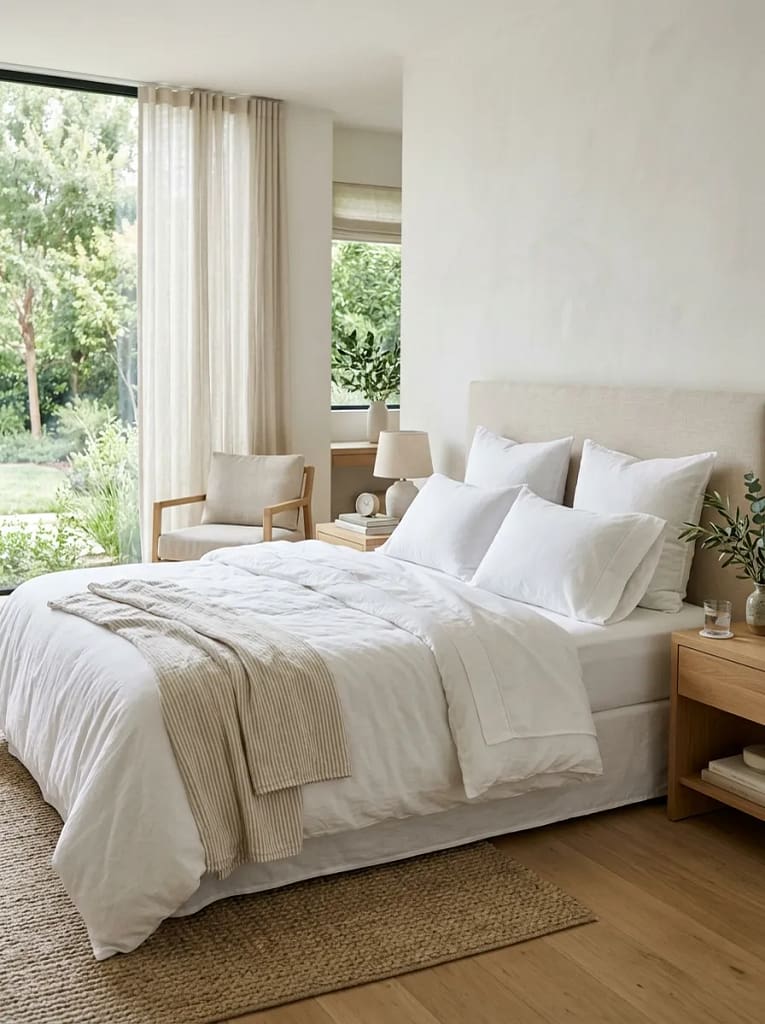
What this idea adds:
- Allows heat and moisture to escape more easily.
- Helps reduce that sticky feeling during sleep.
- Creates a fresh, clean hotel-like appearance.
- Works well year-round with layered bedding.
Your bedding sits directly against your skin for hours every night, so fabric choice makes a noticeable difference. Cotton sheets breathe well and help release heat instead of trapping it around your body. Lightweight quilts or cotton blankets also layer easily, allowing you to adjust warmth without replacing your entire bedding set. Choosing natural fibers instead of heavier synthetic materials often creates a cooler sleeping environment with very little effort.
The weave matters almost as much as the material itself. Percale cotton usually feels crisp and cool, while sateen tends to feel smoother but slightly warmer. I’ve found that simplifying bedding often works better than adding extra layers, especially during hot weather. A lighter bed not only feels cooler but also gives the room a brighter, more relaxed appearance that suits almost any decorating style.
4. Cooling Gel Mattress Topper
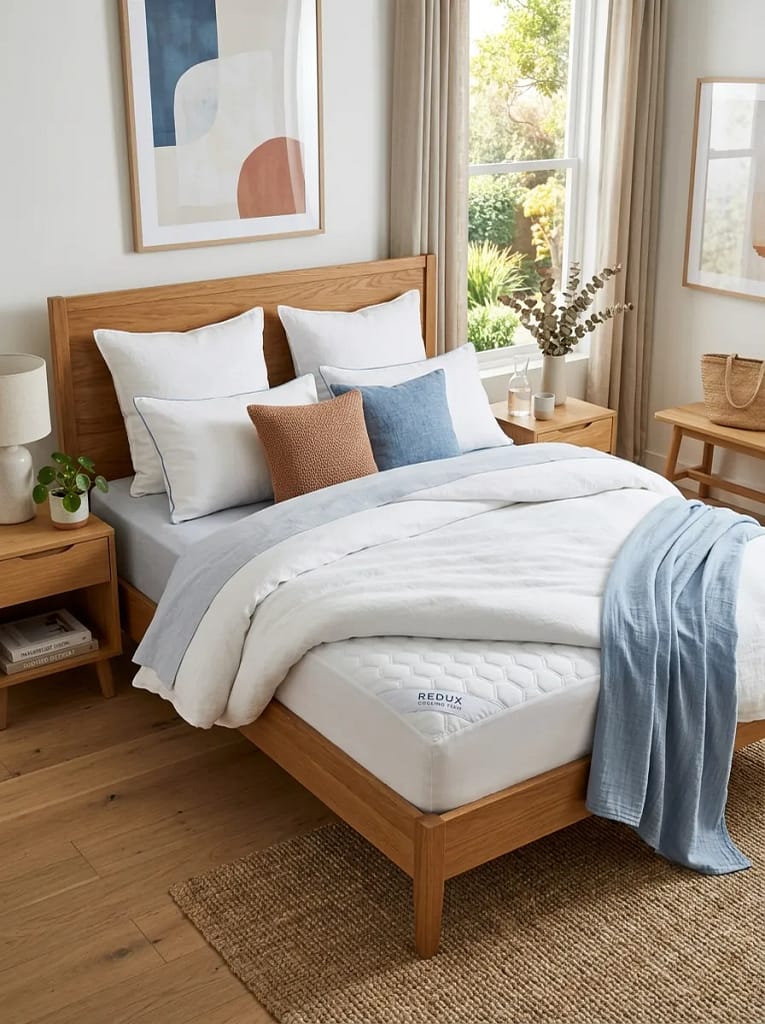
What this idea adds:
- Creates a cooler sleeping surface without replacing the mattress.
- Helps reduce heat buildup during the night.
- Adds extra comfort while supporting better rest.
- A practical upgrade for older mattresses.
A mattress naturally holds body heat throughout the night, which can leave you feeling warm even if the room itself is comfortable. A cooling gel topper creates a buffer between you and the mattress, helping heat disperse more efficiently. It is also one of the simplest upgrades if replacing your mattress is not currently in the budget. Many options are available in different thicknesses, so you can balance comfort and support based on your sleeping position.
Also Read: 23 Outdoor Picnic Area Ideas for Backyard Gatherings
I’ve noticed that many people focus only on cooling the air while forgetting the surface they sleep on. Even a well-ventilated bedroom can feel stuffy if the mattress traps warmth beneath you. Look for a topper with breathable covers and removable, washable fabric to keep it fresh over time. This small addition can noticeably improve comfort while extending the life of your existing mattress.
5. Cross-Ventilated Windows

What this idea adds:
- Encourages fresh air to move through the room.
- Helps remove trapped warm air naturally.
- Reduces stuffiness without extra energy use.
- Makes the room feel brighter and fresher.
Fresh airflow often cools a bedroom faster than opening a single window alone. When two windows on opposite sides are open, air naturally moves through the room, carrying warm indoor air outside while bringing cooler air inside. This simple habit works especially well during cooler evenings and early mornings. If your room has only one window, opening the bedroom door can still improve air movement throughout the house.
Timing makes a noticeable difference. Keep windows closed during the hottest part of the afternoon if outdoor temperatures are higher than indoors, then open them once the evening cools down. In my experience, even fifteen to thirty minutes of fresh airflow before bedtime can make a room feel cleaner and noticeably more comfortable. Lightweight curtains that move freely with the breeze also enhance the relaxed atmosphere.
6. Lightweight Linen Layers
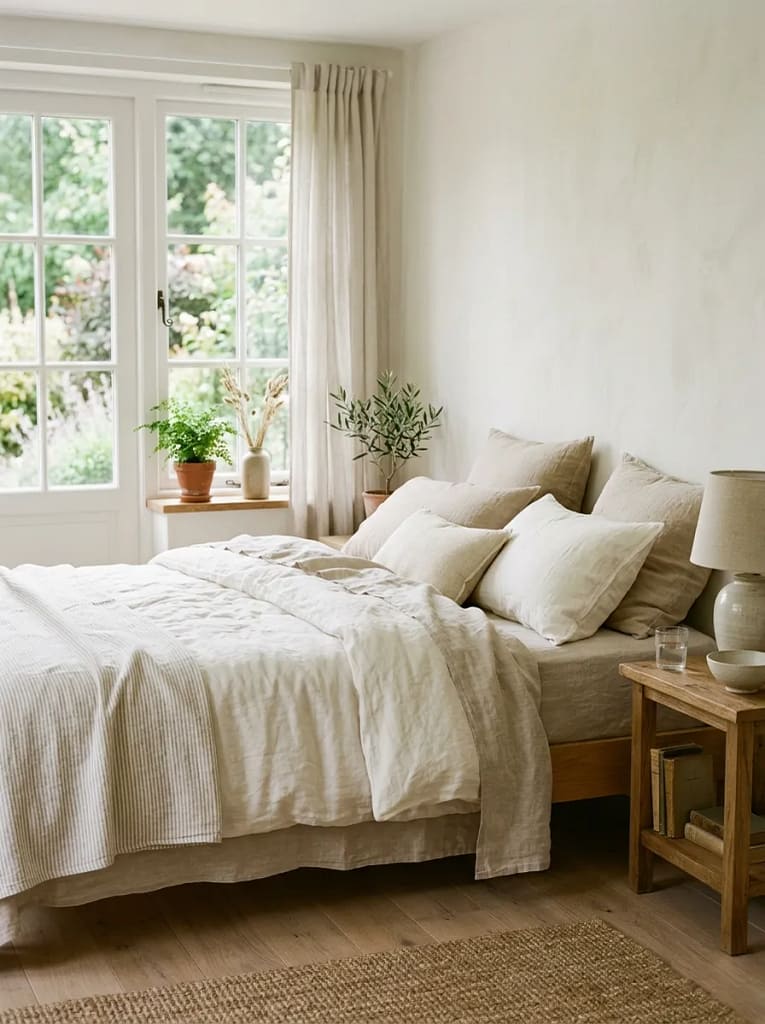
What this idea adds:
- Keeps the bed light without sacrificing comfort.
- Makes seasonal temperature changes easier to manage.
- Adds beautiful texture with minimal effort.
- Creates a relaxed, airy bedroom style.
Heavy comforters often trap unnecessary warmth during warmer months. Swapping them for lightweight linen layers allows you to stay comfortable while still enjoying the cozy appearance of a well-dressed bed. Linen naturally breathes well and becomes softer over time, making it a favorite choice for relaxed, inviting bedrooms. Layering also lets you easily add or remove pieces as temperatures change overnight.
The visual impact is just as appealing as the practical benefits. Softly wrinkled linen creates an effortless, lived-in look that suits modern, coastal, farmhouse, and Scandinavian interiors alike. I’ve found that limiting the bed to two or three breathable layers usually feels more comfortable than piling on multiple blankets. Neutral shades like ivory, oatmeal, and light gray also reflect light beautifully, helping the room feel brighter and visually cooler.
7. Bed Away From Windows
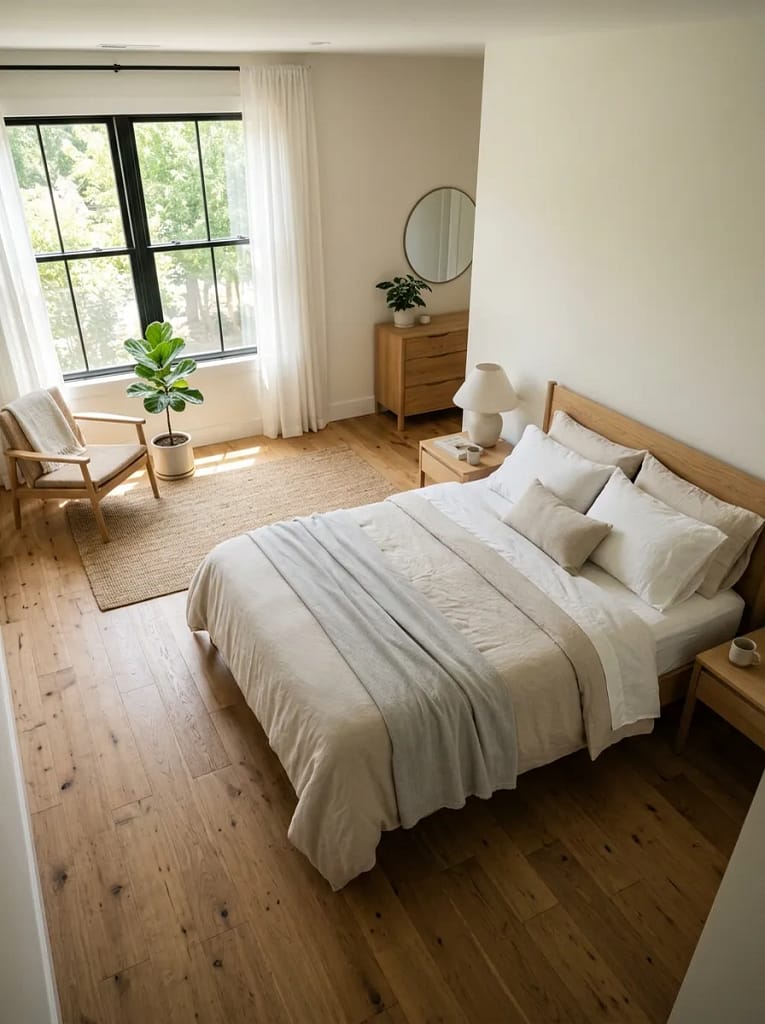
What this idea adds:
- Reduces direct heat from sunny windows.
- Creates a more balanced sleeping environment.
- Improves room layout with minimal effort.
- Requires no additional cost or equipment.
The position of your bed can influence how warm you feel throughout the night. Sleeping directly beside a window often exposes you to heat stored in the glass and surrounding wall after a sunny day. Moving the bed to an interior wall creates a more stable sleeping environment and can make the space feel noticeably cooler. This layout also reduces glare from early morning sunlight while giving the room a cleaner, more balanced appearance.
Before moving furniture, measure at least 24 to 30 inches of walking space around the bed to keep the room comfortable to use. I’ve noticed that even small layout changes can improve airflow because they leave more open space for air to circulate naturally. If relocating the bed is not possible, adding insulated curtains or keeping blinds closed during peak sunlight can still help reduce heat near the sleeping area.
8. Bamboo Window Shades

What this idea adds:
- Filters harsh sunlight before it enters the room.
- Adds natural texture without making the room feel heavy.
- Pairs beautifully with linen and wood finishes.
- Helps create a calm, relaxed atmosphere.
Bamboo shades soften incoming sunlight while allowing a gentle glow to brighten the room. By reducing direct solar heat, they help bedrooms stay more comfortable during warm afternoons without making the space feel dark. Their woven texture also introduces warmth and character, making them an easy fit for coastal, farmhouse, Scandinavian, or modern organic interiors.
Choose shades that sit close to the window frame for better light control. Layering bamboo shades with lightweight curtains gives you flexibility throughout the day while adding depth to the design. In my experience, natural woven materials make a bedroom feel lighter and more inviting than bulky fabric treatments, especially when paired with soft neutral colors and simple furnishings.
9. Portable Air Circulator

What this idea adds:
- Improves airflow throughout the entire room.
- Eliminates warm pockets of stagnant air.
- Fits easily into small bedrooms.
- Uses less space than large floor fans.
Unlike a standard fan that blows air in one direction, an air circulator keeps the entire room moving. Continuous airflow helps distribute cooler air more evenly, making every corner of the bedroom feel more comfortable. This is especially useful in rooms with air conditioning because it spreads cooled air instead of allowing it to collect near vents.
Place the circulator about 3 to 6 feet from the bed and angle it slightly upward rather than directly at your face. This setup creates better whole-room circulation while avoiding an uncomfortable draft during sleep. A model with multiple speed settings and a quiet motor offers the best balance between comfort and uninterrupted rest.
Also Read: 21 Tiny Patio Ideas That Maximize Small Outdoor Spaces
10. Light-Colored Walls

What this idea adds:
- Reflects more natural light throughout the room.
- Creates a brighter and visually cooler atmosphere.
- Makes small bedrooms feel larger and more open.
- Complements nearly every decorating style.
Wall color affects how a bedroom feels, even if it does not directly lower the temperature. Pale shades such as soft white, warm ivory, light greige, or muted sage reflect light instead of absorbing it, giving the room a fresher appearance. This visual effect makes the space feel calmer during warm weather while pairing beautifully with natural wood, linen, and woven textures.
Choose a low-sheen matte or eggshell finish to reduce glare while maintaining a soft look. I’ve found that lighter walls also make seasonal decorating much easier because they work with almost any bedding or accent color. If repainting the entire room is not practical, even one lighter feature wall can brighten the space and create a cooler visual impression.
11. Minimal Bed Styling
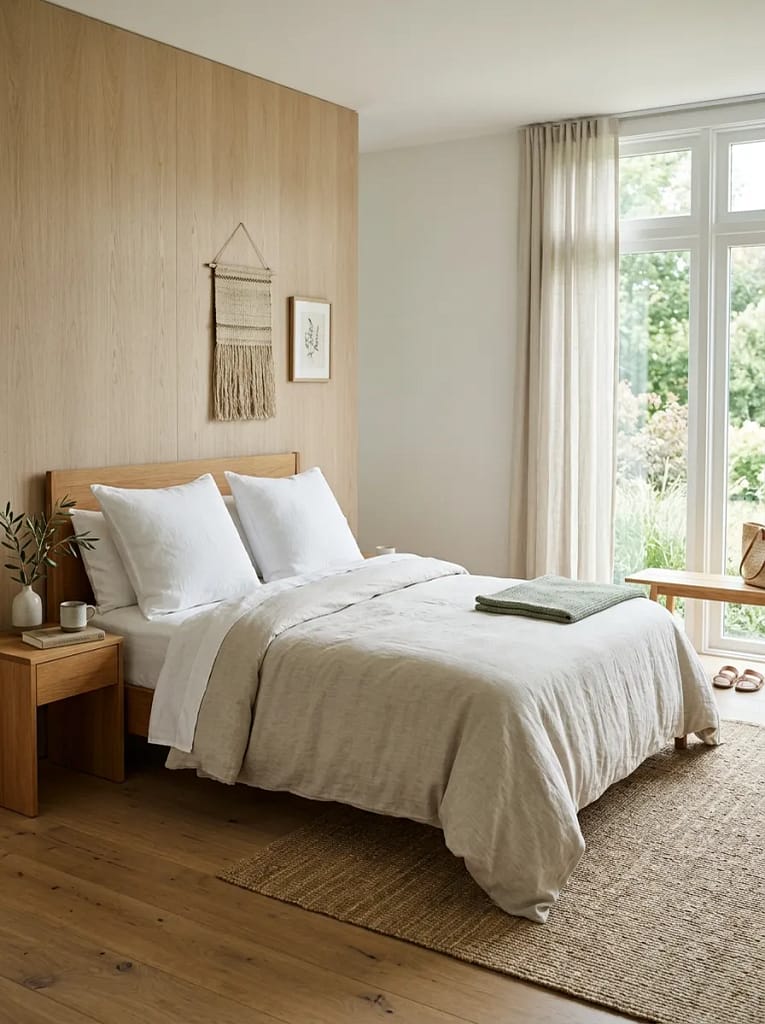
What this idea adds:
- Reduces unnecessary heat-trapping layers.
- Makes the bedroom feel cleaner and more spacious.
- Simplifies daily bed making.
- Creates a relaxed luxury hotel look.
A beautifully styled bed does not need multiple heavy blankets and decorative pillows. Reducing excess layers keeps the bed cooler while making the room feel more open and uncluttered. A lightweight quilt, breathable sheets, and two or four comfortable pillows often provide everything needed for both comfort and style.
Many bedrooms gradually collect extra cushions and thick throws that rarely get used during warmer months. Rotating these items into storage during summer instantly creates a lighter appearance while reducing trapped warmth around the sleeping area. Simple styling also draws more attention to beautiful bedding textures, helping the bedroom feel elegant without looking overly decorated.
12. Houseplants Near Windows

What this idea adds:
- Brings a fresh natural look indoors.
- Softens bright window areas with greenery.
- Adds texture without creating clutter.
- Enhances a peaceful bedroom atmosphere.
Houseplants instantly make a bedroom feel more relaxing and connected to nature. While they should not be relied on to cool a room significantly, leafy plants soften the overall environment and create a fresh visual effect that complements other cooling strategies. Snake plants, peace lilies, and pothos are popular choices because they adapt well to typical indoor conditions.
Place plants where they receive the amount of light they need without blocking airflow or creating crowded corners. I’ve noticed that grouping two or three plants of different heights creates a stronger visual impact than scattering many small pots throughout the room. Decorative woven baskets or simple ceramic planters also help tie the greenery into the rest of the bedroom design.
13. Layered Sheer Curtains
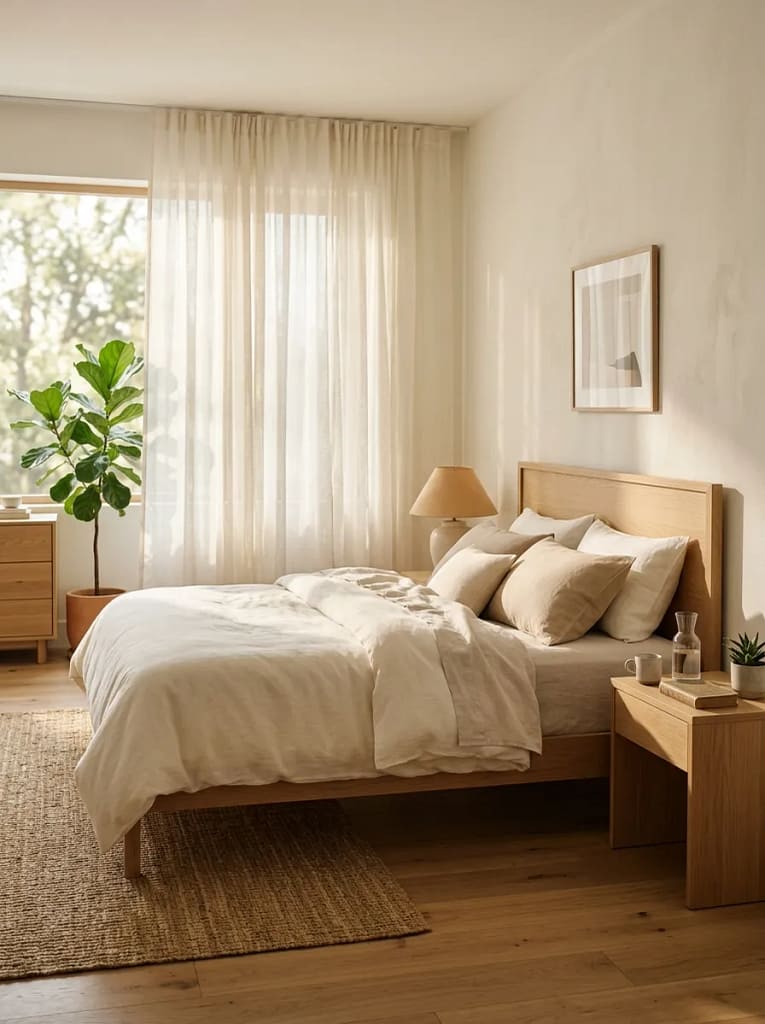
What this idea adds:
- Softens bright sunlight throughout the day.
- Maintains privacy while allowing natural light inside.
- Creates a light, airy bedroom atmosphere.
- Adds texture without making the room feel heavy.
Layering sheer curtains behind heavier drapes gives you better control over light and comfort throughout the day. During the brightest hours, the sheer fabric diffuses harsh sunlight while keeping the room feeling open instead of dark. In the evening, the outer curtains can be closed to reduce heat transfer and create a more restful sleeping environment.
Install curtain rods at least 6 to 8 inches above the window frame to make the ceiling appear taller and the room more spacious. Lightweight fabrics also move gently with natural airflow, adding a calming sense of movement that makes the bedroom feel fresh even on warmer days. Neutral shades such as white, ivory, or soft beige blend easily with almost every decorating style.
14. Open Under-Bed Space
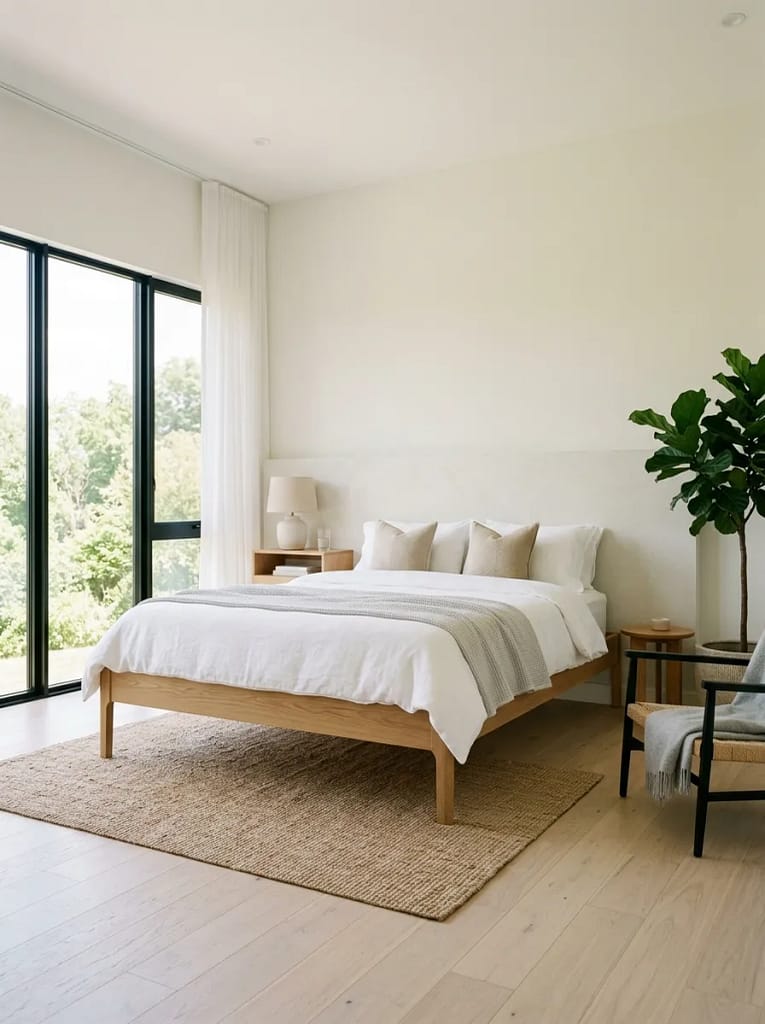
What this idea adds:
- Allows air to circulate beneath the bed.
- Reduces hidden dust buildup.
- Makes the room feel lighter and more spacious.
- Creates a clean, organized appearance.
Beds with open space underneath allow air to move more freely throughout the room compared with storage beds packed full of boxes. Better circulation helps prevent warm air from becoming trapped beneath the mattress while also making routine cleaning much easier. Even a few inches of open clearance can contribute to a fresher feeling bedroom.
If you need extra storage, avoid filling every inch beneath the bed with bulky containers. Leave some open space around the edges so air can still flow naturally. I’ve found that limiting under-bed storage to seasonal items in low-profile bins keeps the room practical without sacrificing comfort or making the space feel crowded.
15. Cooling Color Palette

What this idea adds:
- Creates a visually cooler environment.
- Makes the bedroom feel calm and relaxing.
- Refreshes the space without major renovations.
- Works beautifully with natural materials.
Color influences how a room feels even when the temperature stays exactly the same. Soft blues, gentle greens, warm whites, and sandy neutrals create a fresh atmosphere that naturally feels cooler and more peaceful. Pairing these shades with wood, cotton, linen, and woven accents strengthens the relaxed look while keeping the bedroom timeless.
Choose two or three main colors instead of introducing many competing shades. This approach keeps the space cohesive and visually uncluttered, which contributes to a more restful environment. Simple color palettes also make it easier to update bedding or accessories with the seasons while maintaining a consistent and inviting bedroom design.
16. Quiet Tower Fan
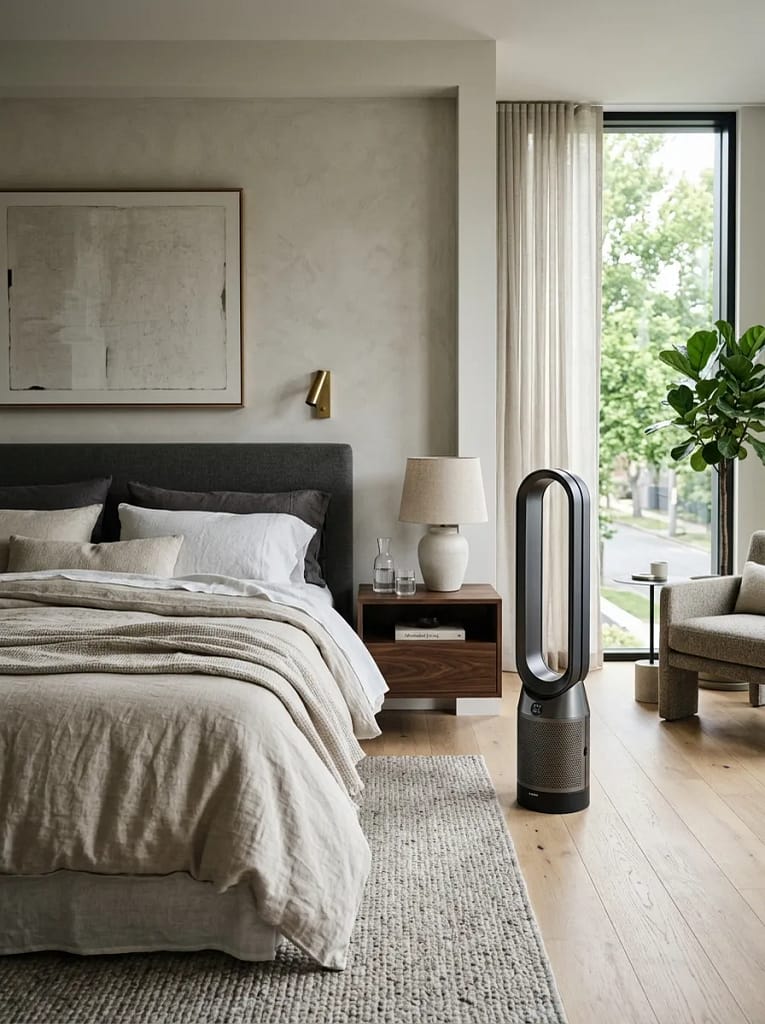
What this idea adds:
- Delivers consistent airflow without taking much space.
- Operates quietly for uninterrupted sleep.
- Fits neatly into small bedroom layouts.
- Adds modern function without visual clutter.
A slim tower fan is a practical solution when ceiling fans are not an option. Its vertical design circulates air efficiently while occupying only a small corner of the room, making it ideal for compact bedrooms. Many models include oscillation and multiple speed settings, allowing you to adjust airflow based on the weather and your comfort level.
Place the fan where air can move freely across the room instead of directly toward the bed. This creates a more balanced cooling effect while preventing an uncomfortable breeze during the night. Selecting a model with a quiet motor and sleep mode can improve comfort without adding distracting background noise.
17. Decluttered Nightstands
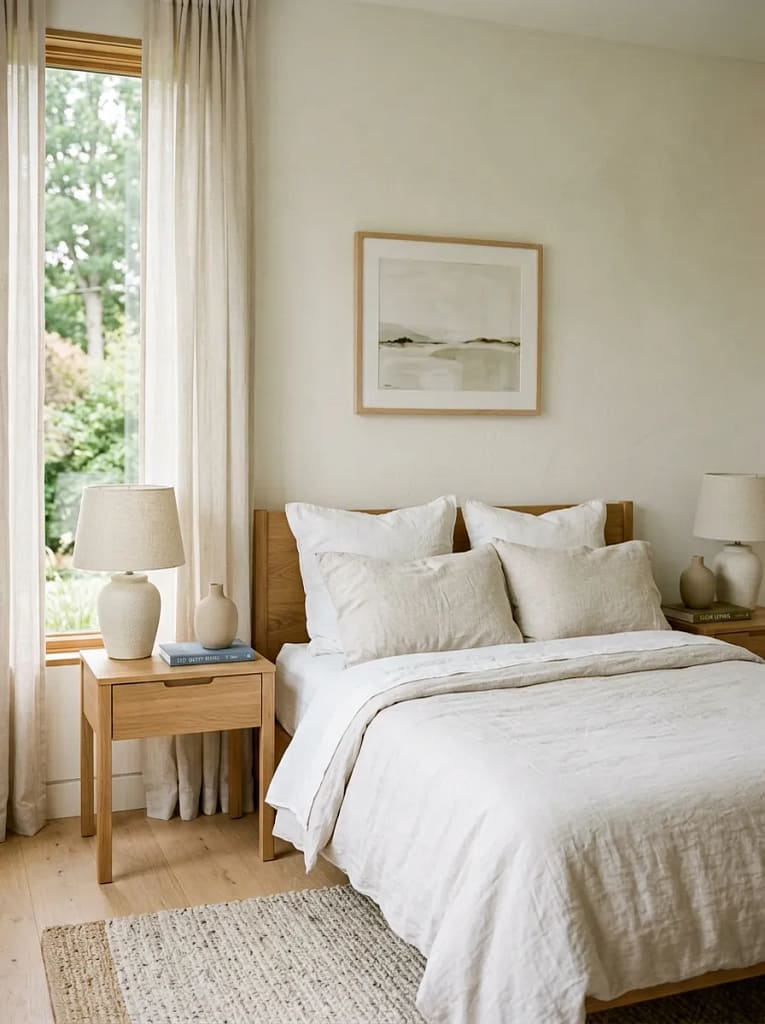
What this idea adds:
- Creates a calmer bedtime environment.
- Makes the bedroom appear more open.
- Keeps everyday essentials within easy reach.
- Supports a clean and relaxing design.
A crowded nightstand can make the entire bedroom feel busy, even when the rest of the space is tidy. Limiting the surface to a lamp, a book, a small tray, and perhaps one decorative item creates a peaceful setting that encourages relaxation. Clean surfaces also make daily dusting easier and prevent small items from accumulating over time.
Use a drawer or small basket to store chargers, remotes, and personal items that do not need to remain visible. I’ve noticed that reducing visual clutter near the bed often makes the room feel more restful because your attention is drawn to the overall space rather than scattered objects.
18. Smart Thermostat Schedule
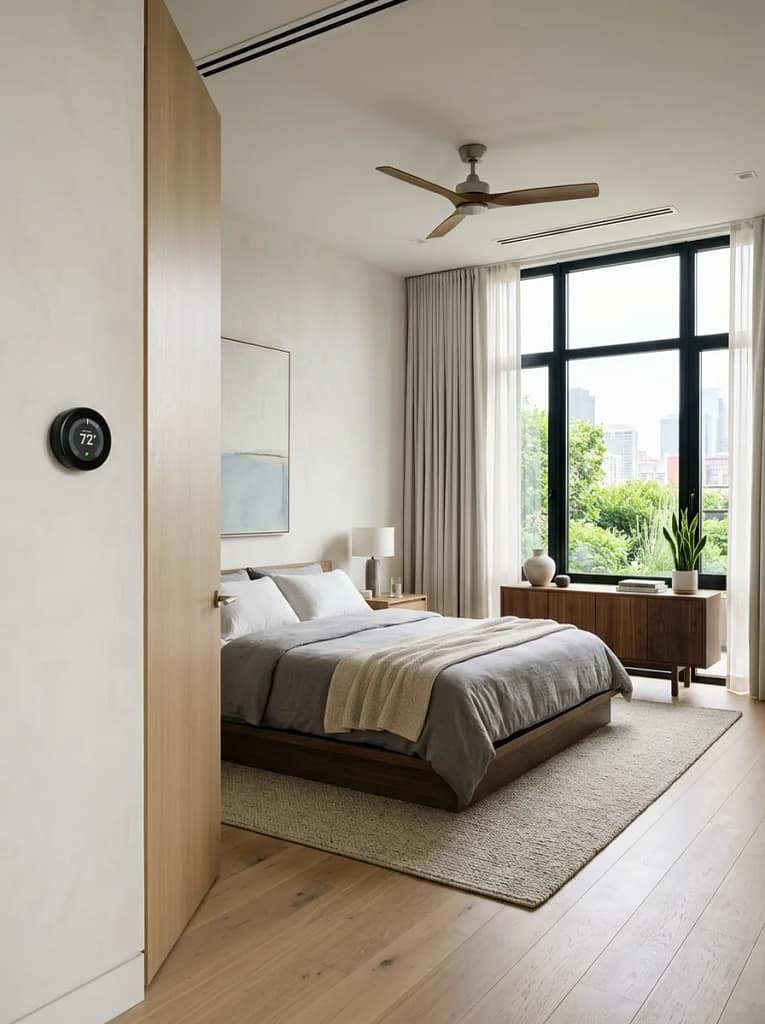
What this idea adds:
- Cools the room before bedtime automatically.
- Reduces unnecessary energy use.
- Maintains a more consistent sleeping temperature.
- Adds convenience to your nightly routine.
If your home uses central air conditioning, a smart thermostat can improve comfort without constant manual adjustments. Programming the temperature to lower shortly before bedtime helps the bedroom reach a comfortable level by the time you are ready to sleep. It also avoids running the system harder than necessary throughout the day.
For many adults, a bedroom temperature around 60 to 67°F (16 to 19°C) is commonly recommended for comfortable sleep, although personal preference varies. Setting a gradual schedule instead of sudden temperature changes often feels more natural while helping manage energy consumption.
19. Closed Daytime Blinds
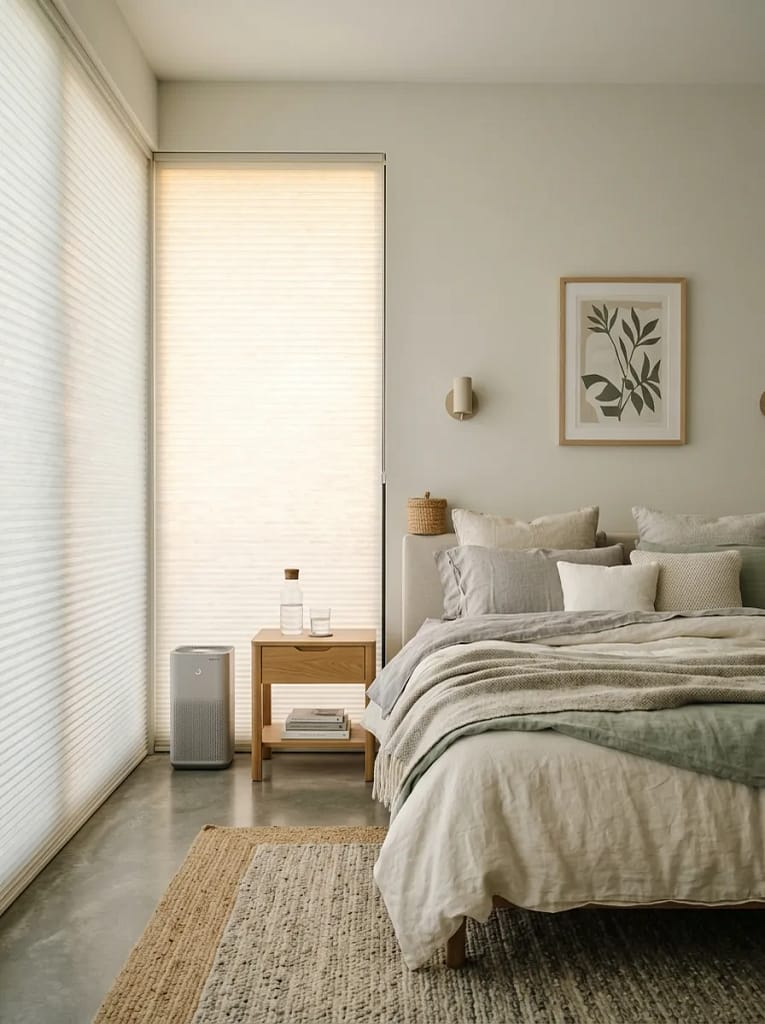
What this idea adds:
- Blocks direct sunlight during the hottest hours.
- Helps prevent heat from building indoors.
- Protects furniture and fabrics from fading.
- Requires no additional equipment.
One of the easiest ways to keep a bedroom cooler is preventing excess heat from entering in the first place. Closing blinds before strong afternoon sunlight reaches the windows reduces solar heat gain and helps maintain a more comfortable indoor temperature. This simple habit works particularly well in rooms with large south or west-facing windows.
Open the blinds again once outdoor temperatures begin to drop so fresh evening light can enter the room. Combining this routine with evening ventilation creates a comfortable balance between natural light and cooler indoor conditions throughout the warmer months.
Also Read: 20 Maximalist Fall Porch Decor Ideas for Every Home
20. Simple Summer Refresh
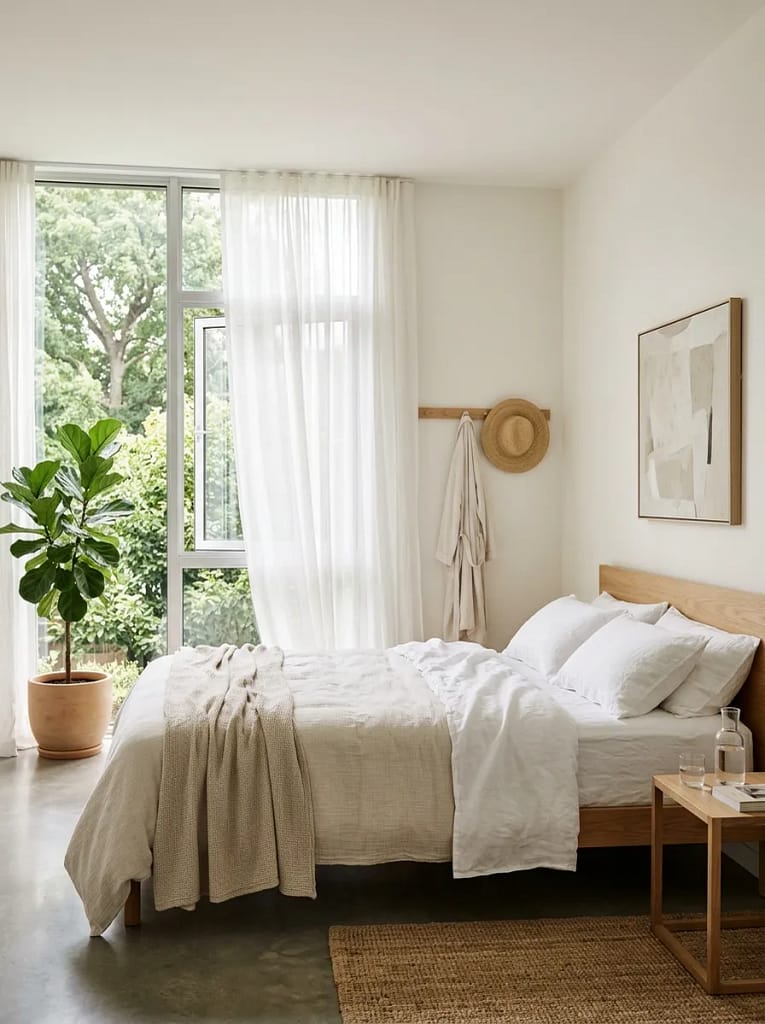
What this idea adds:
- Brings together several cooling ideas in one update.
- Refreshes the bedroom without a full makeover.
- Creates a calm and inviting seasonal look.
- Makes warm nights more comfortable.
Refreshing a bedroom for summer does not require an expensive renovation. Replacing heavy bedding, simplifying decorations, opening up floor space, and choosing breathable fabrics can transform how the room looks and feels. Small improvements work best when they complement one another rather than relying on a single solution.
Walk through the room and identify anything that traps heat, blocks airflow, or adds unnecessary visual weight. Swapping just a few items each season keeps the bedroom feeling fresh while making it easier to sleep comfortably during warm nights. Even modest updates can create a space that feels brighter, lighter, and more relaxing from the moment you walk in.
Frequently Asked Questions
1. How can I keep my bedroom cool without using air conditioning?
You can improve Bedroom Cooling by blocking direct sunlight with blackout curtains or blinds, opening windows during cooler evening hours, using breathable cotton or linen bedding, and increasing airflow with a ceiling fan or air circulator. Combining several small changes often produces better results than relying on a single solution.
2. What is the best temperature for comfortable sleep?
Many sleep experts recommend keeping the bedroom between 60 and 67°F (16 to 19°C) for comfortable sleep, although personal preferences vary. If reaching that range is difficult, focus on improving airflow, reducing heat buildup, and choosing cooling bedding to create a more comfortable sleeping environment.
3. Which bedding materials help keep a bedroom cooler?
Natural fabrics such as cotton, linen, and bamboo are popular choices because they allow heat and moisture to escape more easily than many synthetic materials. Lightweight layers also make it easier to adjust your bedding throughout the year without sacrificing comfort.
4. Do ceiling fans actually make a bedroom feel cooler?
A ceiling fan does not lower the room’s actual temperature, but it improves air circulation, helping your body release heat more effectively. Using a ceiling fan alongside other Bedroom Cooling ideas can make warm nights feel much more comfortable while using less energy than running air conditioning alone.
5. Which Bedroom Cooling idea makes the biggest difference?
There is no single solution that works for every home because room layout, climate, and sunlight all play a role. In most cases, combining blackout curtains, breathable bedding, improved airflow, lighter décor, and smart ventilation habits delivers the most noticeable improvement in sleep comfort.
Conclusion
Creating a cooler bedroom does not have to involve expensive renovations or complicated upgrades. Small changes such as choosing breathable bedding, improving airflow, blocking daytime heat, simplifying your décor, and using smart ventilation can completely transform how your room feels on warm nights. The best Bedroom Cooling strategy is usually a combination of practical improvements that work together rather than relying on a single product.
I’ve noticed that even one or two thoughtful updates can make bedtime feel far more relaxing, and those small improvements often inspire bigger changes over time. Start with the ideas that fit your space and budget, then build from there until your bedroom becomes the cool, comfortable retreat you’ve been looking for. If you found these ideas helpful, save this guide to Pinterest so you can revisit it later, and share it with someone who is ready to enjoy better sleep all night.
Visit sageandshelf for more details.